
How to Evaluate Podcast Guest Opportunities Using 3 Alignment Factors That Actually Drive ROI
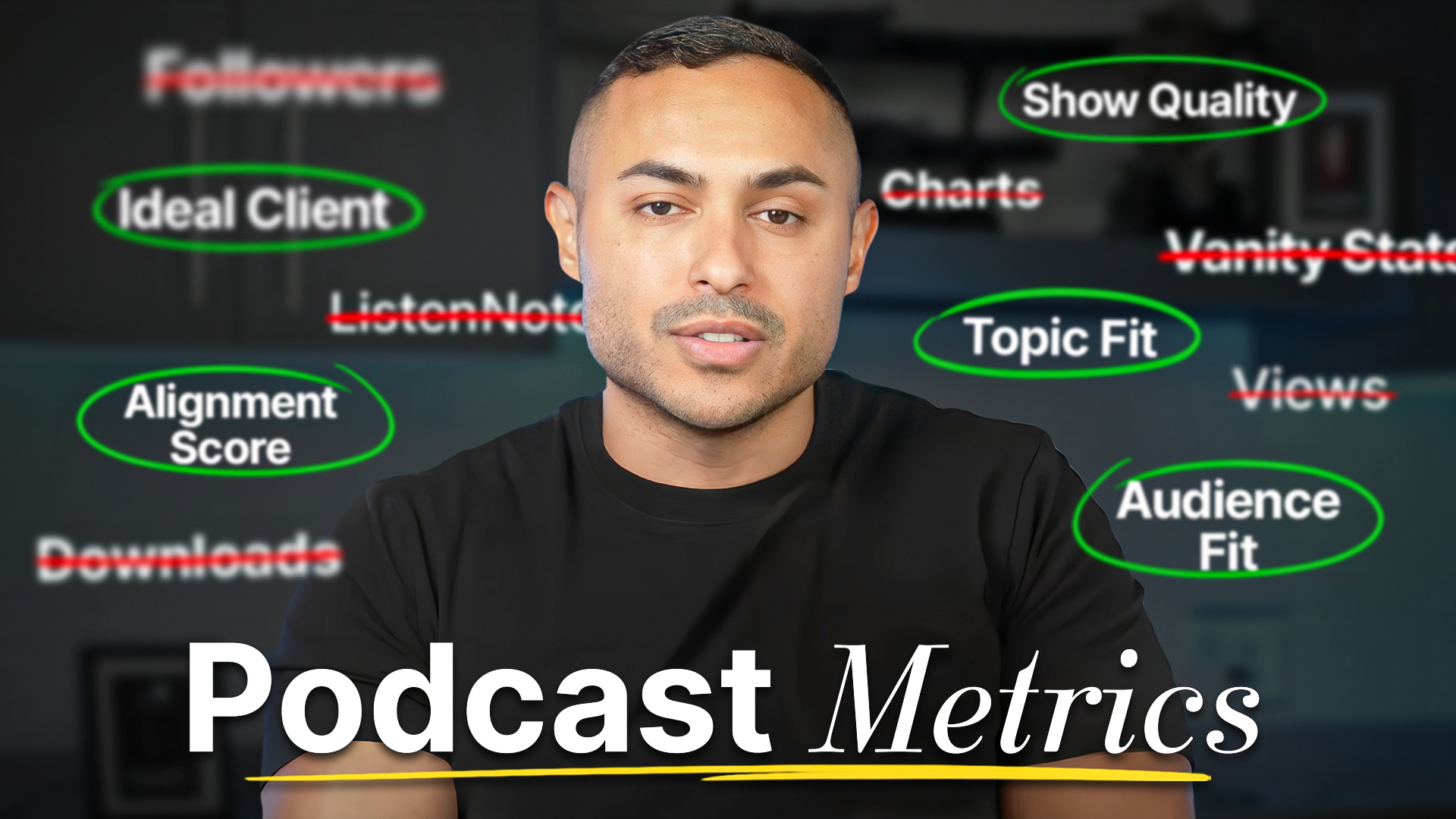
Article Description: Most business owners focus on podcast download numbers and top chart rankings when booking guest appearances. Here's why those podcast metrics are complete BS and the 3 alignment factors that actually convert podcast appearances into paying clients.
TABLE OF CONTENTS:
Why Podcast Download Numbers Are Impossible to Verify and What That Means for You
The Truth About RSS Feeds and Why Nobody Can See Real Podcast Metrics
Why Listen Notes Rankings Are Based on Fake Data and Media Mentions
How Podcasts Buy Their Way to Apple's Top 100 Charts for a Few Hundred Bucks
Why Social Media Followers Mean Nothing for Podcast Guest ROI
The $10K to $50K Podcast Scam That's Robbing Business Owners Blind
Audience Alignment: The First Factor That Actually Determines Podcast Guest Success
How to Know If a Podcast Audience Can Actually Afford Your Offer
Topic Alignment: Why the Podcast Subject Matter Matters More Than Download Numbers
Host and Show Quality: Protecting Your Brand Reputation from Low-Quality Podcasts
Why You Should Never Go on Podcasts with Less Than 40 Episodes
The 3-Factor Alignment Score System That Predicts Podcast Guest ROI
Stop Chasing Celebrity Status and Start Focusing on Business Growth from Podcasts
Most business owners who appear as podcast guests are chasing the wrong metrics. They get excited about top chart rankings, massive download numbers, and huge social media followings. Meanwhile, they're wasting thousands of dollars and hundreds of hours going on podcasts that generate zero paying clients.
This is the harsh reality of the podcast booking industry right now. It's full of people spewing misinformation and bragging about vanity metrics that mean absolutely nothing for your bottom line. Even worse, some are deliberately deceiving business owners just to make a quick buck.
Here's what you actually need to focus on. The three alignment factors that determine whether a podcast guest appearance will convert attention into revenue: audience alignment, topic alignment, and host quality. Everything else is noise designed to distract you from what actually works.
Why Podcast Download Numbers Are Impossible to Verify and What That Means for You
Let's start with one foundational truth about podcast metrics. If anybody on planet earth tells you that they know for sure how many people are tuning into the podcast they're getting you booked on, it is a lie.
Here's why. Apple Podcast and Spotify, the two most popular podcast streaming platforms, do not publicly disclose the download numbers that a podcast gets. This information is completely private and gated behind what's called an RSS feed.
Think of an RSS feed like a phone number for a podcast. Every podcast has one, and it's created by their podcast hosting platform (like Buzzsprout, Libsyn, or Podbean). The hosting platform generates that RSS feed and distributes it to Apple Podcast, Spotify, and all the other audio-based podcast streaming services.
The podcast host themselves can log into their hosting platform and see their exact download numbers. They know how many people listened last week, last month, or last year. But you, as someone considering being a guest on that podcast, cannot see what they see. All metrics are gated behind that RSS feed and hosting platform.
This creates a massive information asymmetry. Unlike YouTube, where you can visit someone's channel and clearly see how many views and subscribers they have, podcast metrics are completely hidden. There's no transparency. No public verification. No way to fact-check the numbers someone tells you.
Now, there are tools like Rephonic and PodcastDB that claim to show estimated download numbers per episode. But even these estimates can be wildly inaccurate because they don't have access to the actual RSS feeds either. Nobody does except the podcast host.
This means you're operating blind when evaluating podcast guest opportunities. And that's exactly what unethical podcast booking agencies count on. They tell you you're going to get in front of 100,000 people, a million people, five million people, but they have absolutely no way of validating those numbers. They're just telling you what you want to hear instead of telling you the truth.
The Truth About RSS Feeds and Why Nobody Can See Real Podcast Metrics
Understanding RSS feeds is critical to protecting yourself from podcast booking scams. An RSS feed is essentially the distribution mechanism that connects a podcast to all the platforms where people listen.
Here's how it works. When a podcast host records an episode, they upload it to their podcast hosting platform. That platform stores the audio file and generates the RSS feed. The RSS feed then pushes that episode to Apple Podcast, Spotify, Google Podcasts, and everywhere else people consume podcasts.
The only place where real download data lives is inside that podcast hosting platform. The host can see it. Nobody else can. Not Apple. Not Spotify. And definitely not the podcast booking agency trying to charge you $20,000 for a guest spot.
This is why agencies and individuals can make completely fabricated claims about podcast audience size. There's no public database to fact-check them against. They can tell you a podcast gets 500,000 downloads per episode when it actually gets 500. And you'd have no way to verify it without asking the host directly for a screenshot of their hosting platform dashboard.
Even then, screenshots can be manipulated. Hosting platform data can be temporarily inflated using shady tactics. The entire system is built on trust, and unfortunately, there are people in this industry who are abusing that trust to rob business owners blind.
The lesson here is simple. Don't make decisions about podcast guest appearances based solely on claimed download numbers. Those numbers are often completely made up or wildly exaggerated. Focus instead on factors you can actually verify, which we'll cover later in this article.
Why Listen Notes Rankings Are Based on Fake Data and Media Mentions
One of the most commonly cited metrics in the podcast booking industry is the Listen Notes ranking. You've probably seen it. A podcast claims to be "top 5% globally ranked" or "top 1% in the business category."
Sounds impressive, right? It must mean tons of people are listening. Wrong.
Listen Notes is a website where you can search for podcasts and see their global ranking. The problem is that this ranking is based on what Listen Notes calls "internal data and external factors like media mentions." In other words, it's not based on actual listener numbers at all.
Here's the reality. About three years ago, my own podcast broke into the top 5% for the first time according to Listen Notes. I was pumped. I thought this meant my audience had grown significantly. So I logged into Buzzsprout, my podcast hosting platform, to check my actual download numbers.
I was only getting 100 people tuning into my podcast monthly. And somehow I was in the top 5% of all podcasts globally. That sent me down a rabbit hole trying to figure out what "top 5%" actually meant.
I emailed the founder of Listen Notes directly and asked. His response was revealing. He said the Listen Score rates podcasts on a scale of 1 to 100 based on "internal data and external factors like media mentions." Being a relative metric, a podcast's score is considered good if it's higher than its peers.
Read that again. It's based on internal data that means nothing and external factors like media mentions. Anyone can go buy a bunch of media mentions to artificially inflate their Listen Notes ranking. There's no verification of actual listener numbers. No validation of real audience engagement. It's essentially a vanity metric that can be easily manipulated.
So when someone tells you their podcast is in the top 1% or top 5% according to Listen Notes, understand that this has almost no relevance to the actual size or quality of their audience. Don't let this metric influence your decision about whether to appear as a guest.
How Podcasts Buy Their Way to Apple's Top 100 Charts for a Few Hundred Bucks
Here's where things get really disturbing. Apple Podcast and Spotify publish top 100 ranked podcasts in various categories like business, health and wellness, technology, and more. These charts are public and visible to everyone.
Many business owners believe that being on a podcast ranked in the top 50 or top 100 guarantees massive exposure. I literally had someone tell me two days ago that they only want to be booked on podcasts in the top 50 of their category on Apple Podcast.
What they didn't know is that podcasts can buy their way onto those charts for a couple hundred bucks.
Here's how the scam works. There are platforms you can sign up for where you pay a nominal fee, let's call it a few hundred dollars. These platforms hire people overseas for $2 to $3 per hour. They hire thousands of these workers and have them listen to a specific podcast for 60 seconds each.
This artificially boosts the podcast's play count. Apple Podcast sees all these "listens" and assumes the podcast is popular. The algorithm pushes it higher on the charts. Before you know it, a podcast with almost no real audience is sitting in the top 50 or top 100 of a major category.
The easiest way to spot this scam is to check ratings and reviews. If a podcast is in the top 100 but has fewer than 100 ratings and reviews on Apple Podcast, that's a massive red flag. Legitimate podcasts with real audiences that large will have hundreds or thousands of ratings and reviews, not 30 or 40.
I've also noticed recently that some podcasts went from having hundreds of ratings and reviews down to 30 or 40. What happened? They bought fake ratings and reviews to boost their numbers initially. But Apple Podcast and Spotify are catching on and penalizing people by removing those fake reviews.
The reason podcast hosts do this is twofold. First, they want to attract big-name guests who don't look too closely at the data. They see "top 100" and assume it's a legitimate opportunity. Second, and more importantly, they're looking to monetize by charging people to be guests on their podcast.
If your podcast is ranked in the top 50, you can charge $10,000, $20,000, even $50,000 or more for a guest spot. Business owners see that top 50 ranking and think it must have massive reach. They pay the fee thinking they're getting in front of hundreds of thousands of people. In reality, the podcast might only have a few hundred real listeners.
This is highway robbery, and it's happening all over the podcast industry right now.
Why Social Media Followers Mean Nothing for Podcast Guest ROI
Stop focusing on social media metrics when evaluating podcast guest opportunities. Social media following has almost no correlation with actual podcast audience size or quality.
I'm not going to name names, but there's a show out there right now with over 10 million followers on Instagram and a massive YouTube presence. They charge people $10,000 or more to be a guest on their show. They make hundreds of thousands of dollars per month doing this.
Here's the problem. One day they'll have someone on talking about astrology. The next day, they'll have people from some very suspicious industries. The day after that, they'll have a sales trainer. Then someone with a sneaker company. There's no niche whatsoever.
This means the people tuning in are not your ideal client. The audience is attracted to a broad variety of topics, not specifically to what you do or the transformation you provide. You might get in front of millions of people, but if 0.000001% of them are actually interested in what you offer, you've wasted your time and money.
Even worse, many of these large social media followings are completely fake. If you dig into the comments and followers, you'll notice a lot are from countries where English isn't the primary language. Now, I love people from everywhere, but if you're spending $10,000 to $20,000 on a podcast appearance, you better make sure that audience is legitimate and speaks your language.
The harsh truth is that people are buying followers, comments, likes, and subscribers to create the illusion of a massive engaged audience. Then they charge business owners huge fees to appear on their podcast, knowing full well the audience is fake or completely misaligned.
I've worked with countless clients who spent $20,000, $30,000, $40,000, even $50,000 going on big-name podcasts with impressive social media metrics. They got absolutely no business from it. Zero. Why? Because they focused on vanity metrics instead of alignment.
The $10K to $50K Podcast Scam That's Robbing Business Owners Blind
Let me spell this out clearly so you can protect yourself. If a podcast wants to charge you to be a guest on their show, ask them this exact question:
"Can you please send me a screenshot from this month of your podcast hosting platform showing your download numbers?"
I did this once on behalf of a client. The podcast host came back and said, "We're in the top 1% on Listen Notes." I already knew that was complete BS based on everything I explained earlier. So I pushed back and said, "Send me your actual data. Send me your metrics. Send me your downloads from your podcast hosting platform."
He never responded. Why? Because it was complete fugazi.
This is the game being played right now. Podcast hosts know that most business owners don't understand how podcast metrics work. They throw around impressive-sounding numbers like "top 1% globally" or "500,000 downloads per episode" knowing you have no way to verify it.
Then they charge you $10,000, $20,000, $50,000 or more for the "exclusive opportunity" to be on their show. You pay the fee thinking you're getting massive exposure. You record the episode. It goes live. And then... crickets. No leads. No calls booked. No revenue.
You just got robbed, and the podcast host walks away with your money laughing.
Protect yourself. Always, always, always ask for proof of download numbers directly from their podcast hosting platform. If they refuse to provide it or give you some runaround about Listen Notes rankings or Apple Podcast charts, walk away immediately. They're trying to scam you.
Audience Alignment: The First Factor That Actually Determines Podcast Guest Success
Now let's talk about what actually matters when evaluating podcast guest opportunities. The first and most important factor is audience alignment.
Does this podcast directly reflect your ideal audience? That's the only question that matters when it comes to audience evaluation.
You can go on a podcast that legitimately has a million people tuning in, but if only 0.000000001% of those people are actually interested in what you do, you're going to waste your time. Audience size is meaningless without audience alignment.
Before you even consider appearing on a podcast, you need to get crystal clear on who your ideal client is. What do they do? What problems are they facing? What transformation are you helping them achieve? What's their financial capability?
Only once you deeply understand your ideal client can you evaluate whether a podcast's audience matches that profile. This isn't just about going on entrepreneurship podcasts because you're a business owner. It's not about getting exposure. It's about getting exposed to the right people.
By "right people," I mean two things. First, people who are already interested in what you do or interested in achieving the end result you help people achieve. Second, people who have the financial capability and willingness to pay you for your worth.
Let me give you an example. Let's say you work in cyber security. You help business owners protect their networks and data. There probably aren't that many podcasts specifically about cyber security for business owners.
But what's the result you help people achieve by protecting their cyber network? Ultimately, better cyber security helps them grow their business with less risk. It protects their revenue. It gives them peace of mind to scale.
So now, if you go on a podcast specifically designed to speak to business growth, you can position your cyber security service as something that actually helps business owners grow. That's advantageous. That's audience alignment.
On the other hand, if you're selling cyber security services for $20,000 to $30,000 and you go on a podcast speaking to working professionals looking to start a side hustle, they're probably not your ideal client. They don't have the financial capability. They're not sophisticated enough yet. That's poor audience alignment, and it's going to waste your time.
How to Know If a Podcast Audience Can Actually Afford Your Offer
This is a critical piece that most people miss when evaluating podcast guest opportunities. You need to ask yourself: Are the people listening to this podcast likely to have the financial capability and willingness to pay me for what I'm worth?
This isn't always publicly available information, but there are ways to figure it out. Look at the sophistication level of the podcast. What other guests have been on? What topics do they cover? What level of business owner or professional are they speaking to?
If you sell high-ticket offers (let's say $20,000 to $50,000), you need to be on podcasts where the audience operates at that level. They need to already understand the value of investing significant money to solve their problems. They need to have businesses generating enough revenue to afford your services.
Going on a beginner-level podcast when you sell premium services is a complete mismatch. You'll spend an hour recording the episode, and nobody listening will be able to afford what you offer. It doesn't matter how big the audience is if they're not financially qualified.
This is why we developed something called Podcast Match AI. It's software that scans thousands of podcasts across multiple data points and automatically matches you with shows that have the demographics and psychographics aligned with your offer and ideal client.
But even without sophisticated software, you can do basic research. Listen to a few episodes. Check out the guests. Pay attention to the types of questions the host asks. You'll quickly get a sense of what level of sophistication that audience operates at.
Don't waste time on podcasts where the audience can't afford you, no matter how impressive the vanity metrics look.
Topic Alignment: Why the Podcast Subject Matter Matters More Than Download Numbers
The second factor that actually determines podcast guest success is topic alignment. In other words, does this podcast talk about topics related to the end result you help people accomplish?
Here's what I mean. Whatever you do in your business is simply the vehicle someone uses to achieve a desired outcome. For us at PodcastGuest.io, we get people booked on podcasts. But that's just the vehicle. The actual outcome we help people achieve is growing their business, getting more clients, and generating more revenue.
So if you're the cyber security professional, you're not just helping people get better at cyber security. You help them protect their network so they can grow their business without worrying about data breaches, ransomware, or losing customer trust.
When you're evaluating podcasts, ask yourself: Does this podcast talk about topics related to business growth, revenue protection, scaling safely, or other themes that are related to the transformation you provide?
If the answer is yes, that's good topic alignment. If the podcast only talks about topics completely unrelated to your work, the audience isn't going to see the relevance of what you offer.
This is the big problem with large, broad podcasts that cover a million different topics. One day they talk about astrology. The next day, sales training. The day after that, sneaker companies. There's no thread connecting the topics.
These podcasts attract people interested in a broad variety of subjects, not people specifically interested in what you do. You might get massive reach, but you'll get zero conversions because the audience isn't there for the outcome you provide.
It's way better to get in front of 1,000 people who are already interested in achieving the end result you help people accomplish than to get in front of a million people just because it makes you feel like a celebrity.
You don't want to be a celebrity. You want to grow your business. That requires topic alignment, not ego-boosting vanity metrics.
Host and Show Quality: Protecting Your Brand Reputation from Low-Quality Podcasts
The third factor that determines podcast guest success is host and show quality. This one is often overlooked, but it's absolutely critical for protecting your brand.
Your brand is an association between who you are and what you choose to associate yourself with. If you associate yourself with low-quality podcasts, that actually lowers your brand reputation. It doesn't help you build authority, trust, and credibility with your audience.
Before you agree to be a guest on any podcast, do your homework. Click on the podcast. Listen to a few episodes. Ask yourself these questions:
Does the audio quality sound good, or does it sound like someone recording in their mom's basement with a $10 microphone? Does the host come across as professional and prepared, or do they seem like they have no idea what they're doing? Are the questions thoughtful and strategic, or are they generic and surface-level?
If the podcast sounds amateurish, don't go on it. I don't care how big their claimed audience is. Appearing on a low-quality show hurts your brand more than it helps.
I had a client two days ago tell me that a previous podcast booking company got him on shows that literally hadn't even produced an episode yet. They were still in pre-production, getting ready to launch. In other words, they had absolutely no audience whatsoever.
That's not just a waste of time. That's damaging to your reputation as a credible expert in your field.
Why You Should Never Go on Podcasts with Less Than 40 Episodes
Here's a simple rule that will save you countless hours and protect your brand reputation. Do not go on podcasts that have fewer than 40 episodes under their belt.
Why 40? Because a podcast host with fewer than 40 episodes is still learning. They're still figuring out their format, their interview style, their audio setup, and how to attract an audience. They don't have a proven track record yet.
More importantly, they probably don't have much of an audience at all. It takes time to build a podcast audience. Most podcasts don't start seeing significant growth until they're well past 50 or 100 episodes.
Going on a brand-new podcast with 5 or 10 episodes is gambling with your time. You're hoping they'll eventually build a big audience and your episode will be discovered later. But statistically, most podcasts fail within the first year. You're much more likely to waste your time than to get any meaningful ROI.
Stick with established podcasts that have at least 40 episodes, ideally more like 100 or 200. These shows have proven they're committed, they know what they're doing, and they've built at least some audience.
This single rule will eliminate 90% of low-quality podcast opportunities and save you hundreds of hours of wasted time.
The 3-Factor Alignment Score System That Predicts Podcast Guest ROI
At PodcastGuest.io, we use a proprietary system called the alignment score to evaluate podcast opportunities for our clients. Instead of focusing on BS metrics like download numbers, Listen Notes rankings, or Apple Podcast chart positions, we focus on the three factors that actually predict ROI.
Every podcast gets scored on audience alignment, topic alignment, and host and show quality. Each factor is worth points, for a total possible score of 5 points. This gives us an objective way to evaluate whether a podcast is truly a good fit.
A podcast might have a million claimed downloads, but if the audience alignment is poor, the topic alignment is off, and the host quality is mediocre, it's going to score low. We won't book our clients on that show no matter how impressive the vanity metrics look.
On the other hand, a podcast with 5,000 legitimate downloads might score incredibly high if the audience is perfectly aligned, the topics match exactly what our client's ideal customers care about, and the host runs a professional, high-quality show.
That smaller podcast will generate far more revenue for our client than the massive podcast with poor alignment. That's the power of focusing on what actually matters instead of chasing numbers that mean nothing.
This is the fundamental shift that needs to happen in how business owners evaluate podcast guest opportunities. Stop asking "How many downloads does this podcast get?" Start asking "What's the alignment score for this podcast based on my ideal client, my offer, and my brand?"
That single shift in thinking will save you thousands of dollars and hundreds of hours while dramatically increasing your ROI from podcast guest appearances.
Stop Chasing Celebrity Status and Start Focusing on Business Growth from Podcasts
Let me be very clear about something. I don't give a damn if you ever hire me or my company to help you get booked on podcasts. But what I definitely care about is making sure you don't make the mistakes that cost business owners thousands of dollars and hundreds or even thousands of hours of their time.
The podcast booking industry is full of people who are either ignorant about how podcast metrics actually work or deliberately deceiving you to make a quick buck. They brag about getting you on top-ranked podcasts with massive audiences, but those metrics are meaningless if they don't align with your business goals.
You don't need to be on the biggest podcasts. You need to be on the right podcasts. The ones where the audience already cares about what you do, where the topics align with the transformation you provide, and where the host runs a quality show that enhances your brand reputation.
It's way better to get in front of 1,000 of the right people than a million of the wrong people. The right people will book calls with you. They'll become paying clients. They'll generate revenue for your business.
The wrong people will just inflate your ego temporarily and leave you wondering why you're not seeing any business results from all these podcast appearances.
If you're going to invest your time in podcast guest appearances (and podcasts are typically 40 to 60 minutes each), make sure you're investing that time wisely. Focus on audience alignment, topic alignment, and host quality. Ignore download numbers, Listen Notes rankings, Apple Podcast charts, and social media follower counts.
Those vanity metrics are designed to distract you from what actually works. Don't fall for them. Protect yourself. And focus on building a podcast guest strategy that actually generates revenue for your business, not just fame for your ego.