
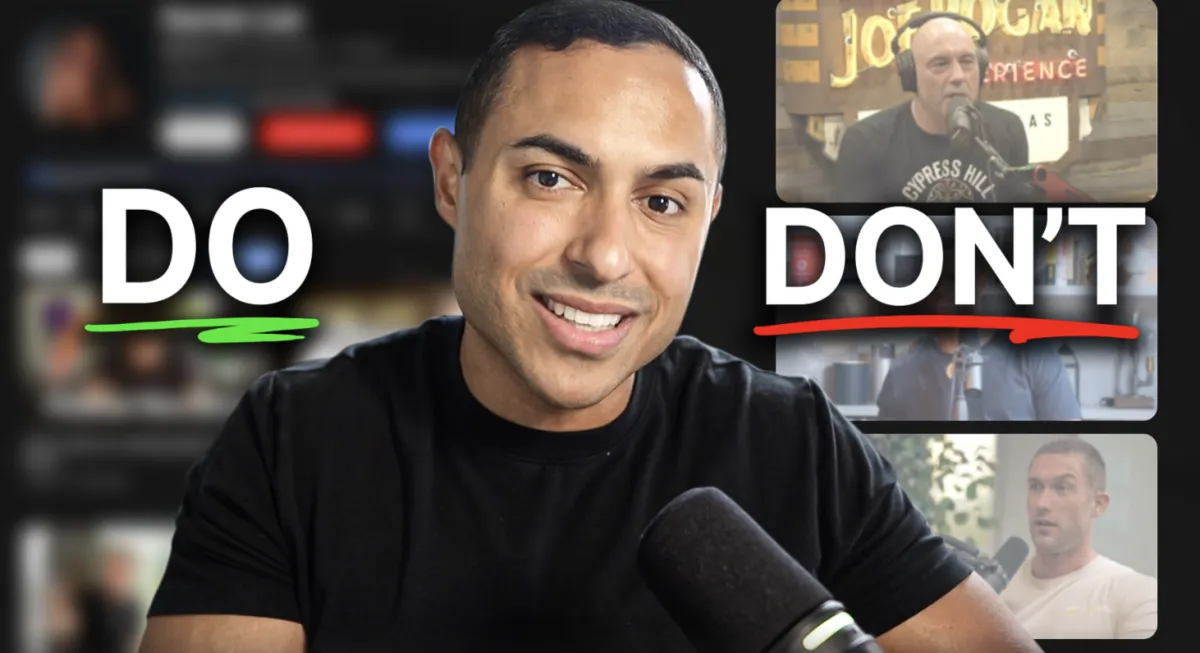
Why Big Podcasts Don't Convert to Sales: The Niche Podcast Marketing Strategy That Generates 10X More Revenue
Article Description: Most business owners think they need to get on Joe Rogan or big-name shows to make money from podcast marketing. Here's why small niche podcasts with targeted audience density convert 10X better - and how one client made $60K from a single 20K-download show.
Table of Contents
Why Big Podcast Marketing Strategies Waste Money Chasing Exposure Instead of Conversion
Audience Density Over Audience Size: The Podcast Marketing Metric That Actually Drives Conversion
Why Broad Podcast Audiences Don't Buy Your Specific Solutions
How to Become the Category King in Your Industry Using Niche Podcast Appearances
How to Build Trust Using Podcast Marketing: Why Time With Prospects Converts Better Than Reach
How Niche Podcast Marketing Shortens Sales Cycles With Pre-Sold Leads
The $60K Podcast Case Study: Why Small Shows With Targeted Audiences Outperform Big Name Podcasts
Why Niche Podcast Marketing Attracts Higher Quality Clients Who Pay More and Stay Longer
How to Identify Which Podcasts Have the Highest Density of Your Ideal Clients
The Layer One Problem Strategy: Going Beyond Obvious Podcast Categories to Find More Opportunities
Why Podcast Listeners From Niche Shows Become Your Best Long-Term Clients
How to Turn One Podcast Appearance Into Multiple Long-Term Marketing Assets
Stop Chasing Big Podcasts and Start Targeting Niche Audiences
Most business owners think getting on big-name podcasts like Joe Rogan or Diary of a CEO is the golden ticket to making money from podcast marketing. They believe that millions of followers equals millions in revenue. They chase the exposure, the vanity metrics, the clout.
But here's the reality: Big podcasts rarely convert listeners into paying clients. And the business owners who figure this out usually figure it out after wasting thousands of hours and tens of thousands of dollars chasing the wrong strategy.
The power of podcast marketing isn't in reaching the most people. It's in reaching the right people - and niche podcasts consistently outperform big-name shows when it comes to actual conversion and revenue.
This article breaks down exactly why small niche podcasts with targeted audiences convert better than broad shows with massive reach, and how to identify which podcasts will actually drive revenue for your business.
Why Big Podcast Marketing Strategies Waste Money Chasing Exposure Instead of Conversion
Most people enter the podcast marketing game with one belief: bigger is better. They think if they can just get on that one massive show with millions of downloads, the business will flood in. The phone will ring off the hook. The calendar will fill with qualified calls.
But here's what actually happens: They get the exposure. They get the downloads. They get people DMing them saying "Great episode!" And then nothing. No leads. No calls booked. No revenue.
The problem isn't that podcast marketing doesn't work. The problem is they're optimizing for the wrong metric.
They're chasing reach when they should be chasing audience density. They're focused on vanity metrics - follower counts, download numbers, episode views - instead of focusing on the only metric that actually matters: How many people in that audience are your ideal client?
Because here's the truth: You don't need a million listeners. You need the right listeners. The ones who are actively looking for the exact solution you provide, who have the money to pay you, and who are ready to take action.
Big podcast appearances give you broad exposure. Niche podcast marketing gives you concentrated conversion opportunities. And conversion is what pays your bills, not exposure.
The Wrong Audience Tax: How Podcast Appearances on 1000 Shows Generated Zero Revenue Despite $150K Spent
Let me tell you about Dan. Dan came to our agency after spending three years and over $150,000 trying to make podcast marketing work for his business. He'd been on over 1,000 podcast episodes. A thousand.
Before we even started the conversation, Dan said something that stopped me in my tracks: "Devon, I need to get something off my chest. I've already been on over a thousand podcasts and spent $150,000 trying to figure out how to make this work."
I asked him what he meant by "make this work." He said: "I don't go on podcasts for exposure. I go on podcasts to get speaking engagements and corporate consulting gigs. And I haven't gotten either."
Dan was a leadership consultant who specialized in conflict resolution for corporate teams. His ideal clients were companies that would hire him to come in, deliver workshops, train management teams, and help with organizational conflict. Perfect use case for podcast marketing, right?
Wrong. Not the way he was doing it.
The problem wasn't that Dan didn't get exposure. He got plenty of exposure from 1,000+ podcast appearances. The problem was he was getting exposed to the wrong people. The agencies he worked with were throwing spaghetti at the wall - getting him on any podcast that would have him, regardless of whether that podcast's audience matched his ideal client profile.
This is what we call the wrong audience tax. You pay with your time, your money, and your opportunity cost when you show up in front of audiences that will never buy from you. Dan spent thousands of hours recording podcasts and hundreds of thousands of dollars on booking services, all to get in front of people who had zero interest in corporate leadership consulting.
The lesson: Exposure to the wrong people is worthless. It doesn't matter if 100,000 people hear you if only 100 of them are remotely interested in what you do.
Audience Density Over Audience Size: The Podcast Marketing Metric That Actually Drives Conversion
Here's the shift that changed everything for Dan and hundreds of our other clients: Stop optimizing for audience size. Start optimizing for audience density.
Audience density is the percentage of a podcast's audience that matches your ideal client profile. It's the concentration of people who are actively looking for solutions to the exact problems you solve, who have the budget to pay you, and who are ready to take action.
Let's break this down with a simple comparison:
Scenario A: Big broad podcast
100,000 downloads per month
Only 1% of the audience is interested in your specific solution
That's 1,000 potential ideal clients reached
Scenario B: Small niche podcast
10,000 downloads per month
50% of the audience is actively seeking your specific solution
That's 5,000 potential ideal clients reached
Which podcast should you choose? Obviously the second one. Even though it's 10X smaller in total reach, it gives you 5X more access to your actual ideal clients.
The big podcast gives you vanity metrics. The niche podcast marketing approach gives you conversion opportunities.
This is why audience density matters more than audience size for podcast marketing. You can go on a show with millions of listeners and convert zero of them. Or you can go on a show with 10,000 listeners where half of them are your exact ideal client and convert dozens.
Why Broad Podcast Audiences Don't Buy Your Specific Solutions
Big-name podcasts are popular because they talk about everything. One day they have an astronomer. The next day a zoologist. Then a social media influencer. Then a business coach. Then someone talking about cryptocurrency.
The problem with this variety is it creates a broad audience that's there for entertainment and general interest, not for specific solutions.
People who listen to broad podcasts are browsing. People who listen to niche podcasts are buying.
Here's what happens when you go on a broad podcast: The audience isn't tuned in because they have a specific problem they're trying to solve. They're tuned in because the show is interesting and entertaining. So when you come on and talk about your specific solution to a specific problem, only a tiny fraction of that audience even cares.
Let's say you run an SEO agency. You go on a broad entrepreneurship podcast. One day they have a tax advisor. The next day a sales trainer. The next day a business coach. Then you show up talking about SEO.
The people tuning in aren't there because they're struggling with SEO. They're there because they like the host or they want general business content. So even though the show might have 100,000 downloads, maybe 1,000 of those people actually have an SEO problem they're actively trying to solve.
Now compare that to going on a podcast that specifically focuses on SEO, digital marketing, and website traffic. Every single person listening to that show is there because they want to improve their SEO. The audience density is infinitely higher.
Broad audiences don't buy specific solutions because they're not looking for specific solutions. They're looking for entertainment, inspiration, or general knowledge. Niche audiences are actively hunting for the exact solution you provide.
How to Become the Category King in Your Industry Using Niche Podcast Appearances
One of the biggest misconceptions about podcast marketing is that you need to get on the biggest shows to build your brand and become known in your industry. People think: "If I can just get on that one massive podcast, everyone will know who I am."
But that's not how brand building works.
A brand is an association between two things. When someone hears your name, what do they think of? That association is your brand. And the way you build that association is through consistent exposure in front of the right audience.
Let me use myself as an example. When you hear "Devon Rodriguez," I want you to think: "Helps me monetize podcast appearances." That's the association I'm trying to build. That's my brand in the podcast marketing space.
Now, if I went on a bunch of random big-name podcasts that talked about health, fitness, relationships, and general business topics, would that help me build that association? No. Because the people listening to those shows aren't my ideal clients. They're not trying to figure out how to monetize podcast appearances.
But when I consistently show up on marketing podcasts, sales podcasts, and business growth podcasts - the places where my ideal clients are hanging out - that's when the association starts to stick. People start seeing me on show after show, talking about the same core message: how to turn podcast appearances into revenue.
That's how you become the category king in your space. Not by getting massive reach on random shows, but by getting concentrated, repeated exposure in front of your ideal audience on niche podcasts that talk specifically about the problems you solve.
Show up on one niche podcast, you're a guest. Show up on 10 niche podcasts, you're becoming known. Show up on 50 niche podcasts in your space, you're the authority.
The business owners who build massive brands through podcast marketing don't do it by getting on Joe Rogan once. They do it by consistently showing up on the right podcasts in their niche, building that association over and over again until they become synonymous with the solution they provide.
How to Build Trust Using Podcast Marketing: Why Time With Prospects Converts Better Than Reach
Here's something most business owners miss about podcast marketing: Podcasts are one of the highest-trust mediums that exists in marketing today.
Why? Because of time.
The way we spell trust is T-I-M-E. The more time a prospect spends with you before entering a sales conversation, the more they trust you. And the more they trust you, the more likely they are to buy from you.
Think about the typical marketing funnel. Someone sees your ad, clicks through to a landing page, maybe watches a 3-minute video, and then books a call. How much time did they spend with you? Maybe 10 minutes max.
Now compare that to podcast marketing. Someone discovers you on a podcast, listens to a 45-minute or 60-minute conversation where you're teaching, storytelling, and demonstrating your expertise. By the end of that episode, they've spent an hour with you.
That's not just exposure. That's relationship building at scale.
And here's where niche podcast marketing has a massive advantage over big broad podcasts: People who listen to niche podcasts are there to solve specific problems. So they're not just casually listening - they're actively paying attention, taking notes, and looking for solutions.
When you show up on a niche podcast and speak directly to the problem that audience is trying to solve, you're not just building awareness. You're building trust, authority, and credibility with people who are already problem-aware and solution-seeking.
This is why leads that come from podcast marketing show up to sales calls pre-sold. They've already spent an hour with you. They've already heard your methodology. They've already decided you're credible. The sales call isn't an education call - it's a buying decision call.
Big podcasts give you reach. Niche podcast marketing gives you trust. And trust is what converts.
How Niche Podcast Marketing Shortens Sales Cycles With Pre-Sold Leads
One of the biggest challenges business owners face today is the length of sales cycles. People don't make buying decisions on the first call anymore. They want to think about it, talk to their team, do more research, sleep on it.
Why? Because trust is at an all-time low in the market. People have been burned by gurus and scammers who promised the world and delivered nothing. So now everyone is skeptical, cautious, and slow to make decisions.
This is where podcast marketing becomes a weapon for shortening sales cycles.
When someone hears you on a podcast - especially a niche podcast where you're speaking directly to their specific problem - they're getting educated before they ever talk to you. By the time they book a call, they've already done their due diligence. They've already decided you know what you're talking about. They're not showing up to learn, they're showing up to buy.
Let me give you a perfect example. We had a client named Ann who helps menopausal women lose weight by rebuilding their metabolism. Ann went on a podcast called The Metabolic Fix that specifically talked about metabolic health for women over 40.
Ann booked over 50 sales calls from that one podcast appearance. But here's the key part: Those leads showed up to the calls already viewing Ann as the authority. They were pre-sold. They'd already listened to the full podcast episode, absorbed Ann's methodology, and decided they wanted to work with her.
Ann didn't have to spend 30 minutes on the call educating them about metabolic health or convincing them her approach worked. The podcast did that heavy lifting. The sales calls became simple enrollment conversations.
This is the power of niche podcast marketing for shortening sales cycles. You're not chasing cold leads who need to be convinced. You're attracting warm, educated leads who've already spent significant time with you and decided you're the solution they've been looking for.
Compare that to running ads or doing cold outreach where people show up to calls skeptical, guarded, and treating it like an information-gathering session. With podcast marketing leads, they show up ready to move forward.
The $60K Podcast Case Study: Why Small Shows With Targeted Audiences Outperform Big Name Podcasts
Let me tell you about Heather. Heather was doing about $200K per month in her business helping menopausal women lose weight. Successful by any measure. When we started working together, I brought her a podcast opportunity.
The podcast was called The Made Fitz Show. About 20,000 downloads per month. Nothing crazy. Not a big-name show. But the audience was perfect: women struggling with weight loss and metabolic issues.
Here's where it gets interesting. The podcast specifically talked about intermittent fasting and caloric deficit approaches. Heather's method was the opposite - she teaches people to eat more to rebuild their metabolism. When I brought her this podcast opportunity, she said: "Devon, I don't think this is a fit. My audience isn't going to be listening to a podcast about intermittent fasting when I teach the opposite approach."
I explained to her something critical: People don't listen to podcasts because they love a specific method. They listen to podcasts to solve a problem.
The people listening to that intermittent fasting podcast weren't in love with fasting. They just wanted to lose weight. So if Heather could go on that show and articulate why her method works better than fasting, she could position herself as the superior solution to the same problem that audience was trying to solve.
Heather trusted the process. She went on the show. She explained why eating more can actually help rebuild metabolism and lead to better long-term weight loss results than restrictive dieting.
She made over $60,000 from that one podcast appearance. From a show with 20,000 downloads per month.
Now let me ask you this: Would she have made $60K from going on a general health and wellness podcast with 500,000 downloads where only 2% of the audience cared about weight loss? Probably not.
The small niche podcast with the right audience density outperformed what any big broad podcast could have delivered. That's the power of focusing on conversion over reach in your podcast marketing strategy.
Why Niche Podcast Marketing Attracts Higher Quality Clients Who Pay More and Stay Longer
Here's something most business owners don't think about when it comes to podcast marketing: The type of podcast you go on determines the quality of clients you attract.
Big broad podcasts attract what we call dabblers. People who are kind of curious about a lot of things. They listen to episodes about astronomy, then psychology, then business, then fitness. They're browsers. They're sampling. They're not committed to solving any specific problem.
Niche podcasts attract doers. People who are problem-aware, solution-seeking, and ready to take action. They're not listening to that podcast for entertainment. They're listening because they have a specific challenge they're trying to overcome or a specific goal they're trying to hit.
Why does this matter? Because the quality of your clients directly impacts your business success.
Dabblers are high-maintenance clients. They're the ones who second-guess your process, don't follow your instructions, want refunds when they don't get results (because they didn't do the work), and generally create more problems than they're worth.
Doers are dream clients. They trust your expertise. They follow your process. They get results. They stay with you long-term. They refer other people. They increase your lifetime value.
When you go on niche podcasts, you're filtering for doers from the start. The fact that someone is listening to a highly specialized podcast about a specific topic means they're serious about solving that problem. They're not just curious - they're committed.
This is why clients that come from niche podcast marketing tend to be higher quality, more coachable, and more likely to get results. They self-select by choosing to listen to content that speaks directly to their specific situation.
Compare that to leads from big broad podcasts who might have heard you mention something interesting, thought "that's cool," and then moved on with their day. Those aren't serious buyers. Those are tire-kickers.
If you want better clients who pay you more, stay longer, and get better results, go on niche podcasts that attract doers.
How to Identify Which Podcasts Have the Highest Density of Your Ideal Clients
Now that you understand why niche podcast marketing outperforms big shows, the next question is: How do you identify which podcasts actually have high audience density of your ideal clients?
Here's the framework: Stop thinking about your industry and start thinking about your ideal client's problems.
The podcasts you should target aren't necessarily the ones that talk about what you do. They're the ones that talk about the problems your ideal clients are trying to solve.
Let me explain with an example. If you help women lose weight, the obvious choice is to target weight loss podcasts. But that's just the surface level. What other problems do women struggling with weight have?
They probably struggle with confidence. They might struggle with relationships. They might struggle with health issues like hormones or thyroid problems. They might struggle with body image and self-esteem.
So the podcasts you should target for your podcast marketing strategy aren't just weight loss shows. You should also look at mindset podcasts, confidence podcasts, hormonal health podcasts, wellness podcasts, and any other show where women who struggle with weight are hanging out trying to solve related problems.
This is what we call looking beyond the layer one problem. The layer one problem is the obvious surface-level issue. But there are always secondary problems that come along with it.
Here's how to identify high-density podcasts:
Step 1: Define your ideal client's core problem What is the main problem you solve? Be specific.
Step 2: List all the related problems What other challenges does someone with that core problem typically face?
Step 3: Research podcasts that talk about those problems Use tools like Listen Notes, Apple Podcasts, or Spotify to search for podcasts in those topic areas.
Step 4: Evaluate audience alignment Look at the podcast's description, recent episode titles, and who they've had on before. Does this audience match your ideal client profile?
The goal is to find podcasts where your ideal clients are actively hanging out, seeking solutions, and ready to take action. That's where audience density is highest. That's where conversion happens.
The Layer One Problem Strategy: Going Beyond Obvious Podcast Categories to Find More Opportunities
Most business owners make the mistake of only targeting podcasts in their exact niche. They think: "I do SEO, so I should only go on SEO podcasts." But that's leaving money on the table.
The layer one problem is the obvious surface-level problem you solve. If you help with SEO, the layer one problem is "I need better search rankings." But what are the downstream problems that come with poor SEO?
Probably not enough website traffic. Probably not enough leads. Probably struggling to compete with bigger competitors. Probably feeling like their business is invisible online.
So the podcasts you should target for your podcast marketing aren't just SEO shows. You should also look at:
Small business marketing podcasts
Entrepreneur podcasts focused on lead generation
E-commerce podcasts where visibility matters
Local business podcasts where Google rankings are critical
Digital marketing podcasts covering broader strategies
Each of these podcasts has an audience that likely struggles with the layer one problem you solve, even if SEO isn't the main topic of the show.
Here's another example. Let's say you help business owners with cash flow management. The layer one problem is "I don't have enough cash in my business." But what are the related problems?
They probably struggle with pricing. They probably have issues with accounts receivable. They might be terrible at collections. They might not understand their numbers. They might be overspending on the wrong things.
So you wouldn't just target accounting podcasts. You'd also target:
Business operations podcasts
Scaling and growth podcasts
Profitability podcasts
Entrepreneur mindset podcasts
Exit strategy podcasts (because cash flow impacts valuation)
The key is to think like your ideal client. Where are they hanging out? What shows are they listening to when they're trying to solve problems related to what you help with?
Going beyond the layer one problem opens up 5X to 10X more podcast marketing opportunities while still maintaining high audience density of your ideal clients.
Why Podcast Listeners From Niche Shows Become Your Best Long-Term Clients
Here's something most people don't talk about when it comes to podcast marketing: The quality and longevity of the client relationships you build.
When someone finds you through a niche podcast, they're not just becoming a client. They're becoming a fan. They already have an emotional connection to you because they've spent time listening to you teach, tell stories, and demonstrate your expertise.
This creates three massive advantages:
Advantage 1: Higher retention rates Clients who find you through podcast marketing stick around longer. Why? Because they already trust you deeply before they ever pay you. They're not coming in skeptical or guarded. They're coming in believing you're the answer to their problem.
When results take time or when challenges come up (which they always do in service businesses), podcast clients are more patient and understanding. They have affinity for you. They're rooting for you. They're not looking for reasons to leave - they're looking for reasons to stay.
Advantage 2: Easier upsells and lifetime value growth Because podcast clients already view you as the authority, it's significantly easier to offer them additional services, higher-level programs, or complementary solutions.
When you launch a new offer, who's going to buy first? The clients who heard you on a podcast, fell in love with your approach, and already trust you completely. They're your early adopters, your biggest advocates, and your highest lifetime value clients.
Advantage 3: Referral multiplier effect Podcast clients don't just buy from you. They tell their friends, colleagues, and business partners about you. Why? Because they're genuinely excited about the solution you provided and they have an emotional connection to your story.
When someone books a call and says "My friend heard you on a podcast and said I had to talk to you," that's a referral with pre-built trust. That prospect is already 80% sold before you even speak.
This referral multiplier effect is unique to long-form content like podcast marketing. People don't get this excited about someone they saw in a Facebook ad. But they do get excited about the person who transformed their thinking during a powerful podcast conversation.
The combination of higher retention, easier upsells, and referral multiplication means that clients acquired through niche podcasts are often worth 3X to 5X more in lifetime value compared to clients acquired through other channels.
How to Turn One Podcast Appearance Into Multiple Long-Term Marketing Assets
Here's the final piece that most business owners completely miss: A single podcast appearance isn't just a one-time exposure event. It's a long-term marketing asset that you can deploy across your entire sales and marketing ecosystem.
When you go on a podcast, you get a recorded conversation that demonstrates your expertise, speaks directly to your ideal client's problems, and positions you as the authority. That's gold. And most people use it once and move on.
Here's what you should actually do with every podcast appearance:
Use it in your organic marketing Clip key moments from the podcast and post them on social media. Write LinkedIn articles based on the core concepts you discussed. Create Instagram reels highlighting specific insights. Every podcast gives you 20-30 pieces of content.
Use it in your paid advertising Run ads featuring clips from the podcast. People trust podcast content more than they trust ads. When someone sees you teaching on a real podcast instead of just pitching in an ad, it builds credibility instantly.
Use it in your sales process Send podcast episodes to leads before sales calls. This pre-frames them, educates them, and gets them bought in on your approach before they even talk to you. Sales calls become easier because prospects show up already trusting you.
Use it in your email sequences Include podcast episodes in your nurture sequences. When someone joins your email list, send them your best podcast appearances as educational content. This builds trust over time and moves people closer to buying.
Use it in your onboarding When new clients join your program, send them key podcast episodes that explain your methodology. This reinforces their decision and gets them excited about the transformation ahead.
One podcast appearance becomes dozens of assets when you deploy it strategically. This is how you maximize ROI from podcast marketing - not by going on one show and hoping for the best, but by turning every appearance into a long-term marketing asset that continues driving results for months or years.
The business owners who win with podcast marketing aren't just focused on getting exposure. They're focused on building a library of trust-building assets that work for them 24/7 across every marketing channel.
Stop Chasing Big Podcasts and Start Targeting Niche Audiences
If there's one thing you take away from this article, let it be this: Podcast marketing success isn't about reaching the most people. It's about reaching the right people.
Big-name podcasts will give you vanity metrics, social proof, and bragging rights. But niche podcast marketing will give you revenue, pre-sold leads, and dream clients who pay you more and stick around longer.
Stop wasting time chasing Joe Rogan and Diary of a CEO. Start identifying the small, specialized podcasts where your ideal clients are actively hanging out, seeking solutions to the exact problems you solve.
Focus on audience density over audience size. Focus on conversion over exposure. Focus on building trust with the right people instead of getting fleeting attention from the wrong people.
That's how you turn podcast appearances into actual business results. That's how clients like Heather make $60K from a single podcast with 20K downloads. That's how clients like Ann book 50+ pre-sold sales calls from one niche show.
The podcasts that will transform your business aren't the ones with the biggest reach. They're the ones with the highest concentration of people who need exactly what you provide.