
How to Hire a Podcast Booking Agency Without Wasting Money: Three Red Flags to Avoid
Article Description: Most business owners who hire a podcast booking agency spend thousands of dollars, go on dozens of shows, and generate zero clients from any of it. Not because podcasts don't work. Because the agency they hired was never built to convert listeners into revenue in the first place.
This article breaks down the three biggest red flags to watch for before signing with any podcast booking agency, plus the exact questions to ask on your discovery call so you don't end up making a very expensive mistake.
Table of Contents:
Why Most Business Owners Hire a Podcast Booking Agency and Generate Zero ROI
Red Flag 1: The Quantity Over Quality Trap That Wastes Your Time and Money
How the Wrong Podcast Booking Agency Cost One Client $150K and Zero Results
Why Audience Alignment Determines Whether Podcast Appearances Convert
How to Vet Any Podcast Booking Agency Using a Three-Part Alignment Framework
Why Podcast Guest Strategy Requires Custom One-to-One Training to Convert
How to Ask the Right Questions About Podcast Performance Optimization
Red Flag 3: No Conversion Systems Means Your Podcast Appearances Generate Nothing
How Podcast Attribution Tracking Tells You Which Shows Are Actually Driving Revenue
What a Done-For-You Podcast Conversion System Actually Looks Like
How to Hire a Podcast Booking Agency That Gets Measurable Results
Most business owners who start exploring podcast guest strategy have the right instinct. They know their ideal clients are out there listening to podcasts. They know that a great conversation on the right show can do more in 60 minutes than a month of cold outreach. And they know that podcast appearances carry a level of credibility that paid ads simply cannot replicate.
The problem is not the strategy. The problem is the execution, and specifically, who they trust to execute it.
The podcast booking agency space is full of companies that are great at one thing: filling a calendar. They will get you booked. Whether those bookings lead to revenue is a completely different question, and most agencies are not built to answer it.
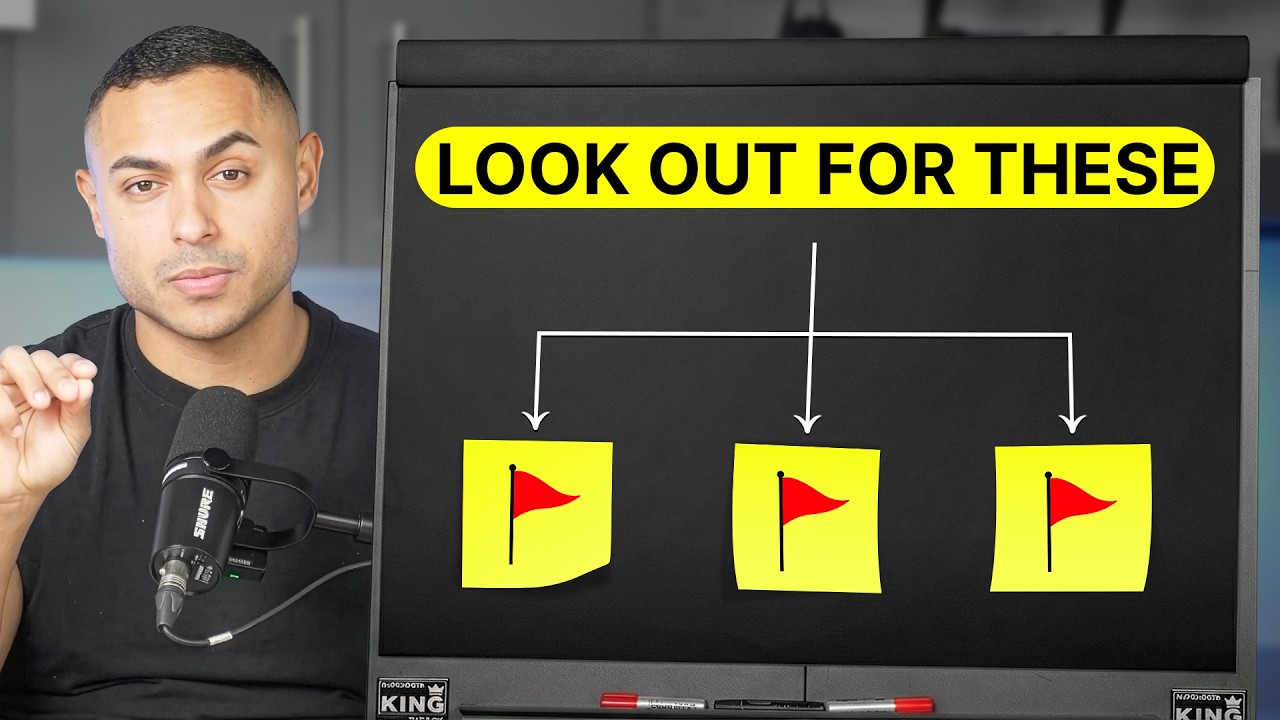
The three red flags below will help you separate the agencies that build podcast marketing systems from the ones that just build booking counts.
Why Most Business Owners Hire a Podcast Booking Agency and Generate Zero ROI
The assumption most people make when hiring a podcast booking agency is simple: more shows equals more exposure, more exposure equals more leads, and more leads eventually means more revenue. On paper, that logic sounds reasonable. In practice, it almost never works.
The reason is that podcast monetization is not a volume game. It is a targeting and conversion game. Getting in front of 10,000 random listeners produces far worse results than getting in front of 300 people who are already actively looking for what you sell.
The agencies that fail their clients almost always have one thing in common: they optimize for bookings, not for business outcomes.
They measure success by how many shows they got you on. They track downloads and reach. They celebrate big-name placements regardless of whether that audience had any business buying from you. And when the results are flat, they suggest you just need to go on more shows.
This is the core dysfunction inside most of the podcast booking agency space right now. And the three red flags below are exactly where it shows up.
Red Flag 1: The Quantity Over Quality Trap That Wastes Your Time and Money
The first thing most podcast booking agencies lead with is a number. Thirty shows. Fifty shows. A hundred shows in twelve months. It sounds impressive. It is not.
Here is what that pitch actually signals: the agency is built around throughput, not targeting. Their operational model depends on volume because volume is what is easy to measure, easy to promise, and easy to deliver regardless of whether it works.
One high-quality podcast appearance in front of a perfectly aligned audience will outperform fifty random bookings every single time.
This is not a philosophical position. It is the consistent pattern that shows up in client after client who comes in having already worked with another agency. They went on dozens of shows. They spent months doing interviews. And they have almost nothing to show for it in terms of revenue.
The other issue is time. As a business owner, your calendar is your most valuable asset. Time is not a replenishable resource the way money is. Every hour you spend recording an interview that produces zero results is an hour you cannot get back. And when you are doing ten, twenty, or fifty of those interviews with the wrong audiences, the cost is not just the agency fee. It is every hour of preparation, every recording session, and every follow-up conversation that led nowhere.
A podcast booking agency that respects your time and your business will never pitch you on volume as the main metric.
How the Wrong Podcast Booking Agency Cost One Client $150K and Zero Results
One of the clearest examples of what the quantity trap actually costs in real numbers came from a client named Doug. Doug was a leadership consultant working specifically with Fortune 5000 companies. His work helped large organizations resolve internal conflict. His ideal client was a senior HR leader or executive at a major corporation.
Before working with Podcastguest.io, Doug had already spent over $150,000 across more than half a dozen podcast booking agencies. He had appeared on over a thousand podcasts. By any traditional measure of podcast marketing activity, Doug had done everything right.
He had generated zero speaking engagements and zero consulting clients from any of it.
When pressed on why, the pattern became obvious immediately. None of those agencies had targeted shows that actually reached Fortune 5000 HR leaders. They had booked Doug on entrepreneurship shows, personal development shows, business growth shows, and general leadership content. Some of those shows had large audiences. None of those audiences were the specific buyer Doug needed to reach.
Doug was not the problem. His story was compelling. His expertise was real. His service was strong. The audience targeting was completely wrong, and no volume of appearances on the wrong shows was ever going to fix that.
This is what happens when a podcast booking agency optimizes for bookings instead of business outcomes. The client gets activity without results. And by the time they realize what went wrong, they have already burned through significant time and money.
Why Audience Alignment Determines Whether Podcast Appearances Convert
Audience alignment is the single most important factor in whether a podcast appearance generates revenue. It matters more than the size of the show. It matters more than the host's reputation. It matters more than production quality or download numbers.
Audience alignment means two things. First, the listeners of that show are already interested in the outcome you help people achieve. Second, those listeners are financially qualified to invest in what you sell.
This is where most podcast guest strategy breaks down. An agency gets excited about a show with 50,000 downloads per episode. They book you on it. The audience is entrepreneurs in the startup phase trying to build their first six-figure business. You sell a high-end consulting retainer to established businesses doing over a million a year. The audience mismatch is complete, and no amount of charisma on your end is going to close that gap.
The right audience is always a smaller audience. That is counterintuitive but it is consistently true. A 300-person audience where 80% of listeners are your exact ideal client will convert at a dramatically higher rate than a 30,000-person audience where almost no one is in a position to buy from you.
When evaluating any podcast booking agency, the central question is not how many shows they can get you on. It is how they define and pursue audience alignment for your specific business and your specific ideal client.
How to Vet Any Podcast Booking Agency Using a Three-Part Alignment Framework
A rigorous vetting process for podcast selection looks very different from a standard booking operation. At Podcastguest.io, every podcast that goes in front of a client first passes a three-part alignment framework where each show is graded out of five points across three areas.
The first area is audience alignment: how closely does the audience of this show match the specific ideal client profile for this business? This is not a general assessment. It is a detailed evaluation of who actually listens, what problems they are trying to solve, and whether those problems align with what the client solves.
The second area is topic relevance: does this podcast consistently cover topics that would attract the specific audience we are targeting? A leadership podcast is not automatically a fit for a leadership consultant. The question is whether the specific topics covered on that show draw in the seniority level, industry, and mindset of the buyer we need.
The third area is host and show quality: does the production standard, host credibility, and overall reputation of the show reflect positively on a guest? Going on low-quality shows does not just produce zero results. It actively hurts brand positioning.
Every show is scored across all three areas before it ever reaches the client. Shows that do not clear the internal threshold are rejected without the client ever seeing them. The goal is never to hit a booking quota. The goal is to present only the highest-quality, most aligned opportunities available in the market.
When evaluating a podcast booking agency, ask directly: "How do you select which podcasts to pitch me on?" If the answer does not include a clear, specific framework for audience alignment, that is red flag number one confirmed.
Red Flag 2: No Performance Training Means No Podcast ROI
Getting booked on great shows is only half the equation. What you do on those shows determines whether any of it converts. And this is where the second major red flag shows up.
Most podcast booking agencies do not provide meaningful performance training. Some offer a basic orientation video or a one-page tip sheet. Some promise coaching and deliver a generalist account manager who has never actually studied what makes podcast conversations convert. And almost none of them do what actually works: a customized, one-to-one review and preparation process built around your specific ideal client and your specific offer.
A podcast appearance is a fundamentally different conversion vehicle than a stage speech, a sales call, or a webinar. There is a host involved who controls the frame of the conversation. You cannot see the audience. You cannot read body language or adjust in real time based on facial expressions. And the listener is typically multitasking, which means your ability to maintain their attention through the entire episode determines whether they ever take action on your offer.
None of this is addressed by generic public speaking advice. None of it is addressed by "here is how to tell your story" training. The mechanics of engineering a podcast conversation to maximize listener retention and drive action require a very specific set of skills that most business owners have never been taught.
The agencies that skip this training are leaving the most important variable entirely in your hands without giving you the tools to manage it.
Why Podcast Guest Strategy Requires Custom One-to-One Training to Convert
The distinction between generic training and effective podcast guest strategy comes down to one word: custom.
Generic training tells you to open with a strong hook and be authentic. Custom training sits with you and maps out exactly which talking points are going to resonate with the specific audience on the specific show you are about to appear on. It accounts for your offer, your ideal client's objections, the typical questions that host asks, and the psychological journey a listener needs to go through to move from stranger to booked call.
Podcastguest.io has worked with some of the highest-level speakers and business owners in the world, including clients who charge $200,000 for a single speaking engagement. These are not people who need to be taught how to communicate. They are articulate, compelling, and deeply experienced on stage and on camera.
Even at that level, the performance optimization work consistently produced measurable improvement in conversion rates from podcast appearances. The difference was never communication skill. The difference was understanding the specific mechanics of how podcast conversations build trust, create desire, and move people to take action on an offer.
When evaluating a podcast booking agency, ask specifically: "How are you going to help me optimize my podcast performance to drive conversions?" If they cannot clearly articulate a framework for retention-based conversion, or if they offer only pre-recorded generic training videos, that is red flag number two.
How to Ask the Right Questions About Podcast Performance Optimization
The conversation about podcast performance optimization needs to happen before you sign with any agency. Here is exactly what to ask and what to listen for.
First, ask: "Will you be reviewing my actual podcast recordings with me one-on-one?" The answer should be yes. If an agency is not listening to your episodes and giving you direct, personalized feedback, they cannot actually help you improve. Generic advice does not close the gap between a forgettable appearance and one that generates ten calls in 48 hours.
Second, ask: "How do you customize talking points for each show?" The answer should involve a real process. They should be researching the host's past episodes, identifying the audience's dominant problems, and helping you frame your expertise in the language that specific audience uses to describe what they need.
Third, ask: "What does your training actually cover?" If the answer is storytelling frameworks, speaking confidence, or how to get the host to like you, those are nice but they are not what drives podcast ROI. What drives conversion is retention strategy, offer framing, and the specific language structures that create urgency without feeling salesy.
The agencies that have real answers to these questions have invested in understanding how podcast conversations actually convert. The ones that deflect, pivot to vague language, or promise a portal full of training videos they built once and never updated are the ones that will waste your time.
Red Flag 3: No Conversion Systems Means Your Podcast Appearances Generate Nothing
The third red flag is the most expensive one because it is the hardest to spot upfront. An agency can get you great shows. They can give you solid training. And you can still generate zero revenue if no one has built the podcast conversion system that captures and converts the listeners who actually take action after your episode.
Most podcast appearances send people to a website, a generic landing page, or worse, an Instagram handle. None of those are designed to convert warm podcast listeners. None of them create urgency. None of them qualify the lead. And none of them track which specific episode drove that person to take action.
The result is that even when everything else goes right, the revenue leaks out. Someone listens to your episode, gets genuinely interested, looks you up, lands on a page that was not built for them, and bounces. You never knew they were there. You have no data on what happened. And you have no way to follow up because the system was never designed to capture them.
This is not a minor operational detail. The conversion infrastructure is the difference between a podcast marketing strategy that builds a business and one that just builds a resume.
When evaluating a podcast booking agency, the third critical question is: "What conversion systems do you actually build and set up for me?" If the answer involves telling you what to build but not actually building it, or if they cannot articulate a specific funnel with attribution tracking and a follow-up sequence, that is red flag number three.
How Podcast Attribution Tracking Tells You Which Shows Are Actually Driving Revenue
One of the most overlooked failures in podcast marketing is the absence of attribution tracking. Most business owners who have been doing podcast appearances for months have no idea which shows actually drove leads, which episodes produced booked calls, and which ones produced nothing despite large audiences.
Without podcast attribution tracking, you are flying blind. You cannot double down on what is working. You cannot cut what is not. And you cannot make a data-driven case for the ROI of your podcast investment because you have no data to point to.
A properly built podcast funnel uses unique tracking links, episode-specific landing pages, and backend reporting that connects every lead back to the exact episode that generated them. This means you know, with precision, that a specific interview on a specific show produced eight qualified applications and three closed deals. Not approximate credit based on timing. Actual hard attribution.
This data transforms how you approach your podcast guest strategy. You stop guessing which audience types convert best. You stop wasting time on shows that look impressive but produce nothing. You start investing your limited time into the types of shows and audiences that consistently drive revenue.
When a podcast booking agency cannot show you how they track results at this level of specificity, you are not getting a marketing partner. You are getting a scheduling service.
What a Done-For-You Podcast Conversion System Actually Looks Like
A complete podcast conversion system is not something you can bolt on after the fact. It has to be built before your first episode goes live. And when it is built correctly, every single appearance feeds into a machine that captures warm listeners, qualifies them automatically, and books them onto your calendar without requiring you to chase anyone.
The four components of a complete conversion system are: the podcast-exclusive offer, the pre-selling funnel, the attribution tracking system, and the multi-channel follow-up sequence.
The podcast-exclusive offer is an offer that listeners cannot find anywhere else. It creates genuine urgency because it is specific to the fact that they heard you on a podcast and it expires. This is not a link to your website. It is a custom offer built around the psychological triggers that move podcast listeners specifically.
The pre-selling funnel takes someone from "I just heard this person on a podcast" to "I am ready to have a real conversation about working together" before they ever get on a call with you. It uses video, email, and social content to build the trust and familiarity required for a qualified conversation.
The podcast attribution tracking system connects every action back to its source. You always know where your leads came from, which episodes are producing results, and which shows are worth repeating.
The multi-channel follow-up sequence, what could be called a manhunt sequence, pursues warm leads across email, text, and social until they either book or ask to be removed. Warm podcast leads are the highest-intent prospects you will ever encounter. A system built to capture and convert them should reflect that.
How to Hire a Podcast Booking Agency That Gets Measurable Results
The three red flags covered in this article are not abstract warnings. They are the exact patterns that separate podcast booking agencies that generate real revenue from the ones that generate impressive booking reports and nothing else.
Red Flag 1 is any agency that leads with volume. Thirty, fifty, a hundred shows is not a strategy. It is a quota. Protect your time. Demand quality and alignment over raw numbers.
Red Flag 2 is any agency that cannot articulate a specific, custom, one-to-one training process for optimizing your performance and driving podcast ROI. Generic training produces generic results. You are not a beginner. Do not accept beginner-level support.
Red Flag 3 is any agency that teaches you about conversion systems instead of building them for you. The difference between a business that generates consistent revenue from podcast monetization and one that has a lot of great conversations with nothing to show for it comes down entirely to the infrastructure behind each appearance.
Ask every agency these questions directly. Listen for specificity. If the answers are vague, enthusiastic, and short on actual process, you already have your answer.
The right podcast booking agency will not just get you booked. It will build the entire system around those bookings so that every appearance has the best possible chance of turning attention into revenue.