
How to Convert Podcast Listeners Into Clients Using the Three Layer Messaging Framework
Article Description: Most business owners go on podcast guest appearances and get zero clients because they focus on telling their story instead of making listeners feel understood. Here's the exact three layer messaging framework that turns casual podcast listeners into clients by leveraging psychological triggers that build deep trust and drive conversion.
TABLE OF CONTENTS:
Why Telling Your Story on Podcast Guest Appearances Is Costing You Clients
How to Shift Your Podcast Guest Strategy From Branding to Client Acquisition
Why Making Podcast Listeners Feel Understood Converts Better Than Any Sales Pitch
The Three Layer Messaging Framework That Turns Podcast Listeners Into Clients
How to Describe the Lived Experience to Build Instant Trust on Podcast Appearances
Why Telling Versus Describing Is the Biggest Podcast Guest Messaging Mistake
How to Use Sensory Language on Podcast Guest Appearances to Activate the Imagination
How to Layer Inner Feelings on Top of Lived Experience to Deepen Podcast Conversion
The Transitional Phrase That Bridges Experience to Emotion on Podcast Appearances
How to Verbalize Silent Thoughts That Podcast Listeners Would Never Say Out Loud
Why the Three Layer Messaging Framework Turns Your Sales Team Into a Cashier
How to Apply the Three Layer Podcast Guest Messaging Framework Across Any Niche
Why You Need to Practice This Podcast Guest Strategy Until It Becomes Second Nature
OPENING SECTION
Most business owners treat podcast guest appearances as a branding exercise. They show up, tell their story, share their expertise, and hope that somehow translates into clients. But it almost never does.
The problem isn't the podcasts themselves. The problem is the messaging. Specifically, most podcast guests spend their entire appearance trying to get the audience to understand them. But the person who wins in sales and marketing is the person who makes the client feel the most understood. That's a completely different game.
There's a framework that flips the entire dynamic of how you show up on podcasts. Instead of talking about yourself and hoping people connect, you use a specific three layer messaging approach that makes listeners feel like you're inside their head. When that happens, trust skyrockets, and trust is what converts podcast listeners into paying clients.
This article breaks down exactly how the framework works, why it's so effective from a psychological standpoint, and how to apply it across any niche or industry.
Why Telling Your Story on Podcast Guest Appearances Is Costing You Clients
Here's what most podcast guests do. They go on a show, talk about their background, share some knowledge, maybe tell a compelling story about their journey. And then they wrap up with something like "check out my website" or "follow me on Instagram."
The result? Zero leads. Zero calls booked. Zero revenue.
And the worst part is they have no idea why it didn't work. They think the podcast just wasn't the right fit. Or the audience wasn't big enough. Or podcasts "just don't work" for their business.
But the real issue is their messaging strategy. They're focused entirely on getting the audience to understand who they are and what they do. That approach feels logical. But it misses the one thing that actually drives people to take action.
People don't buy from the person they understand the most. People buy from the person who makes them feel the most understood. That's a subtle but massive difference. And once you grasp it, everything about how you show up on podcast guest appearances changes.
The psychology behind this is well documented. When someone feels deeply understood, it triggers a neurological trust response. The brain categorizes that person as "safe" and "aligned." This is the same mechanism that bonds people in close relationships. When you trigger that response on a podcast, you shortcut the entire trust-building process that normally takes weeks or months of marketing.
How to Shift Your Podcast Guest Strategy From Branding to Client Acquisition
Most business owners view podcast appearances through a branding lens. They think showing up on shows builds awareness, gets their name out there, and positions them as an authority. And while that's partially true, it's an incredibly expensive way to use your most precious resource: your time.
Think about it. Business owners spend tens of hours, hundreds of hours, and in some cases thousands of hours appearing as guests on podcasts purely for branding. That's time they could be spending on revenue-generating activities. The math doesn't add up unless you have a system that turns those appearances into actual clients.
The shift is simple but powerful. Stop viewing podcast guest appearances as PR and start viewing them as a client acquisition channel. This means every time you go on a show, you have a specific messaging strategy designed to move listeners from "that was interesting" to "I need to work with this person."
This doesn't mean you turn podcasts into a sales pitch. Nobody wants to listen to that, and hosts won't invite you back. It means you use a psychological framework that builds such deep trust during the conversation that listeners naturally want to take the next step with you. The selling happens without "selling."
When you make this mindset shift, podcast guest appearances go from a time-consuming branding exercise to one of the most powerful client acquisition systems available to business owners today.
Why Making Podcast Listeners Feel Understood Converts Better Than Any Sales Pitch
Here's the core principle that makes everything else in this framework work. The person who wins is the person who makes the customer feel the most understood.
Not the person with the best credentials. Not the person with the most followers. Not the person with the fanciest website. The person who makes someone feel like "finally, somebody gets what I'm going through."
There's a psychological reason this works so powerfully. Every person listening to a podcast is carrying something. Something they think about late at night when they can't sleep. Something they'd never tell their spouse, their friends, or their coworkers. It's that inner conversation happening between their ears that keeps them up at 10 PM despite being exhausted.
They're saying things to themselves like "How much longer can I live like this?" or "I can't believe I broke another promise to myself." They're fighting a battle that nobody else knows about. And when someone asks how they're doing, they say "Great!" while feeling anything but great.
When you go on a podcast and verbalize the things they've been internalizing, something powerful happens. Their brain registers you as someone who truly understands their situation. Not surface-level understanding. Deep, visceral, "this person has been where I am" understanding.
This is what psychologists call empathy-based trust transfer. The listener's brain moves you from the category of "stranger on a podcast" to "someone who gets me on a level nobody else does." And when that shift happens, you don't need a hard sell. You become their person. The specific solution to their specific problem.
Napoleon Hill wrote in his book "How to Sell Your Way Through Life" that the greatest salespeople paint onto the imagination as Picasso paints onto a canvas. For Picasso, the tool is a paintbrush. For you as a podcast guest, the tool is your words and language. You're not just sharing information. You're activating someone's imagination and taking them somewhere they don't typically go by themselves.
The Three Layer Messaging Framework That Turns Podcast Listeners Into Clients
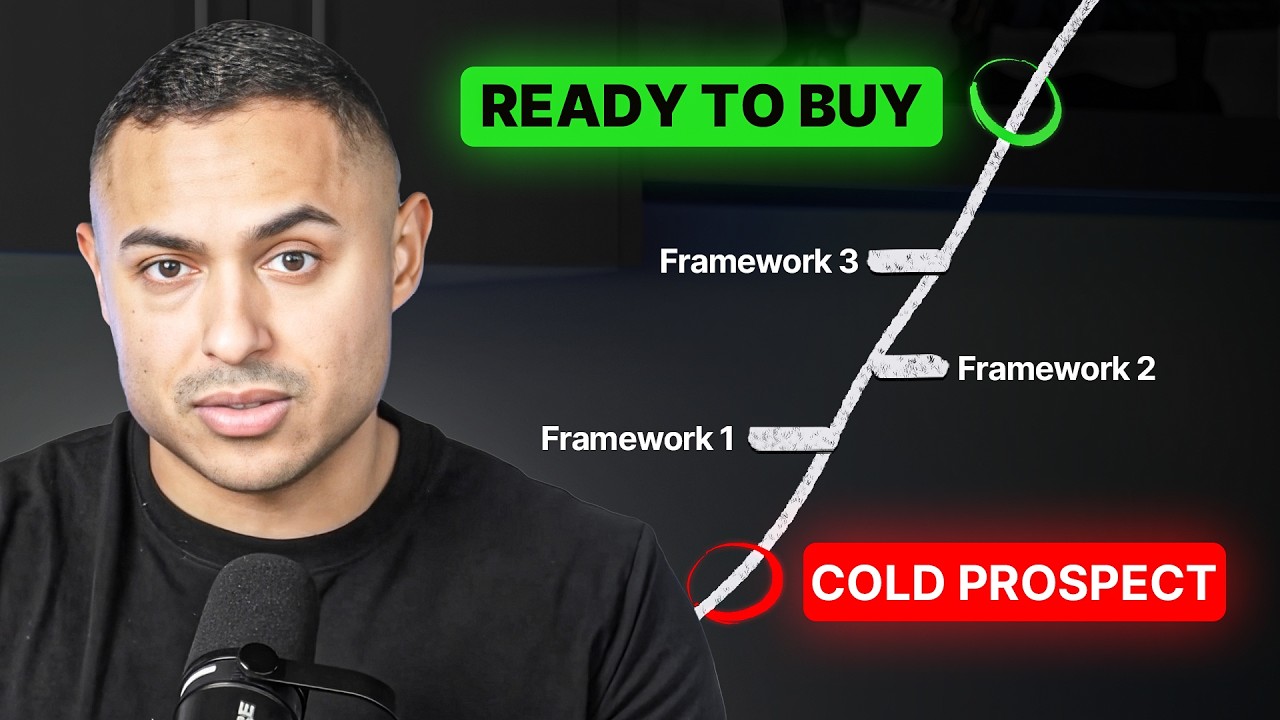
The three layer messaging framework is built on a simple concept. Think of it like peeling back the layers of an onion. Each layer goes deeper into the listener's psychology, and each layer unlocks a new level of trust and understanding.
Here are the three layers:
Layer 1: The Lived Experience. This is where you describe the listener's day-to-day reality so vividly that they say "Yep, that's me." This is surface level, but it's the entry point.
Layer 2: The Inner Feeling. This is where you articulate the specific emotions that their lived experience produces. Now you're going deeper than what happens to them. You're speaking to how it makes them feel.
Layer 3: The Silent Thoughts. This is the deepest layer. These are the things they think to themselves but would never say out loud. The internal dialogue that keeps them up at night. When you verbalize these, you become the only person who truly understands what they're going through.
Each layer builds on the previous one. The lived experience creates the feeling. The feeling produces the silent thought. When you stack all three layers together on a podcast appearance, you create a level of connection that no competitor can match. The listener feels understood on a level that quite frankly nobody else has ever achieved with them.
The beauty of this framework is that it works across any niche, any industry, and any audience. Whether you're talking to burned-out entrepreneurs, struggling therapists, or people preparing for retirement. The three layers apply universally because every human being has lived experiences, inner feelings, and silent thoughts.
How to Describe the Lived Experience to Build Instant Trust on Podcast Appearances
The first layer of the framework is the lived experience. This is where you describe your ideal client's daily reality so specifically and viscerally that they immediately recognize themselves in what you're saying.
The key distinction here is between telling and describing. Most podcast guests tell the audience about problems. "A lot of people I work with are really struggling to stay consistent." That's telling. It's surface level. It doesn't create any emotional connection.
Describing is completely different. Instead of saying "a lot of you are super tired at the end of your day," you paint a picture using sensory-rich language that puts the listener inside the experience.
Here's what describing looks like: "It's 7 PM and you're driving up to your driveway. You park the car and you just sit there. You take one of those big deep breaths because after another long day, you finally have a moment to decompress. You walk in, kick your shoes off, grab the Doritos, collapse on the couch, close your eyes, and just sit there. Because you realize how exhausting your day just was."
Do you see the difference? The first version tells someone they're tired. The second version makes them feel the couch underneath them. They can see the driveway. They can feel that deep breath. Even if their specific version is different (maybe they go to a bar instead of grabbing Doritos), their brain automatically enters their own version of that reality.
This is a psychological phenomenon called narrative transportation. When you describe a scenario with enough sensory detail, the listener's brain doesn't just process the information. It simulates the experience. Their mirror neurons fire as if they're actually living it. This is why descriptive language on podcast guest appearances creates a trust response that generic statements never will.
The lived experience is the entry point. It's where the listener first thinks "Wow, this person really gets my day-to-day." And that recognition is what opens the door for the deeper layers.
Why Telling Versus Describing Is the Biggest Podcast Guest Messaging Mistake
This single distinction between telling and describing is the number one messaging mistake that podcast guests make. And it's the reason most podcast appearances generate zero clients.
Telling sounds like: "A lot of people I work with have tried things that just don't work." That's factually accurate. But it creates zero emotional response. The listener hears it, nods slightly, and moves on. No connection is formed. No trust is built. No action is taken.
Describing sounds like: "A lot of the people I work with are in that position where they have this burning desire to lose weight. They've tried the 1,200 calorie diets. They've practically lived at the gym, spending two plus hours on cardio alone. And when they look at their food, they feel utter disgust. And what ends up happening is they fall right back into the same habits that got them there in the first place because what they were doing was not sustainable."
The difference is night and day. The first version is a generic statement that applies to everyone and resonates with no one. The second version uses specific, sensory details that make the listener see themselves in the scenario.
The reason describing works so powerfully comes down to how the brain processes information. When you hear a generic statement, your prefrontal cortex processes it as data. When you hear a vivid description, your brain's sensory cortex activates as though you're experiencing it firsthand. You're not just hearing words. You're reliving your own version of that experience.
This is why the best podcast guests don't just share knowledge. They use their words to activate the listener's imagination and transport them into a reality they recognize as their own. That's the skill that separates podcast guests who convert from podcast guests who get applause but zero clients.
How to Use Sensory Language on Podcast Guest Appearances to Activate the Imagination
The secret to making the lived experience layer work is engaging as many of the five senses as possible in your descriptions. You want to speak to what people see, hear, feel, smell, and touch.
Most podcast guests only speak to one sense (usually what people see or think). But when you stack multiple senses into a single description, the listener's brain lights up across multiple regions simultaneously. This creates a much stronger neural imprint and a much deeper emotional connection.
Here's an example using a therapist niche. A generic version would be: "Being a therapist is difficult and after a long day, you're super tired."
A sensory-rich version sounds like this: "It's your eighth or ninth patient that day. And secretly in your mind, you wish that person didn't show up. Because you're sick and tired of running a practice that you don't even want to be in anymore. So in between sessions, the only thing you care about is whether the next person is going to cancel. And although that cancellation takes money out of your paycheck, it's much easier to deal with that than sitting through another session you don't want to do."
Notice what happens in the second version. The listener can see the clock on the wall. They can feel the weight of sitting in that chair for the ninth time. They can hear the notification sound of a cancellation. They're not just hearing about a therapist's day. They're inside it.
This is what it means to be an "imagination activator." You're using your words on podcast guest appearances to take listeners somewhere in themselves that they don't typically go on their own. And when you take them there, they don't just respect you. They trust you. Because you clearly understand their world at a level that nobody else has demonstrated.
The practical application is straightforward. Before any podcast appearance, write out 2-3 vivid descriptions of your ideal client's daily reality. Include specific details: times of day, physical actions, environmental details, and internal moments. The more specific you get, the more universal it becomes. Because specificity triggers the listener to enter their own version of the reality you're describing.
How to Layer Inner Feelings on Top of Lived Experience to Deepen Podcast Conversion
Once you've described the lived experience and the listener is nodding along thinking "this person gets my day-to-day," it's time to go one layer deeper. Layer two of the three layer messaging framework is the inner feeling.
This is where you articulate the specific emotions that the lived experience produces. You're not just describing what happens to them anymore. You're speaking to how those experiences make them feel. And this is where the trust deepens significantly.
The psychology behind this layer is rooted in emotional validation. When someone's feelings are acknowledged and articulated by another person, it creates what psychologists call a "felt sense of being known." This is one of the most powerful bonding mechanisms in human psychology. It's the same thing that makes people feel connected to a great therapist or a close friend. They feel seen.
On a podcast, when you layer the inner feeling on top of the lived experience, the listener moves from "this person understands my situation" to "this person understands ME." That's a massive psychological shift. And it's the shift that moves someone from passive listening to active engagement.
Here's what this sounds like in practice. Instead of just describing the experience of coming home exhausted, you layer on the emotional reality: "You just got done with a 10-hour shift. You drive up to the driveway, park the car, take one of those deep breaths because finally for the first time all day you can decompress. You collapse on the couch, close your eyes, look back on your day and think 'Tomorrow I have to do it again.' And ultimately, it has you feeling hopeless. Feeling frustrated that you allowed yourself to get to that place. Feeling a sense of anxiety because you don't know how much longer you can do it."
Do you see how the emotional layer transforms the message? The lived experience makes them think "that's me." The inner feeling makes them feel "this person knows what it's like to be me." And that distinction is everything when it comes to converting podcast listeners into clients.
The Transitional Phrase That Bridges Experience to Emotion on Podcast Appearances
There's a specific transitional phrase that makes the shift from lived experience to inner feeling feel natural and fluid on podcast guest appearances. The phrase is "and ultimately."
This might seem like a small detail, but it's the linguistic bridge that connects what happens to someone with how it makes them feel. Without it, the shift can feel abrupt or forced. With it, the listener follows you naturally into the deeper emotional layer.
Here's how it works in practice: "You sit there looking in the mirror after another failed attempt. You did everything right this week. The diet, the gym, the meal prep. But the scale didn't move. And ultimately, it has you feeling like a failure. Like no matter how hard you try, nothing ever works. Like there's something fundamentally wrong with you."
The phrase "and ultimately" gives the listener's brain a moment to transition from the visual scenario into the emotional reality. It's a psychological on-ramp that allows the listener to go deeper without resistance.
This works because of how the brain processes narrative sequences. When you describe an experience, the listener's brain is in "simulation mode," visualizing the scenario. When you abruptly shift to emotions without a bridge, it can feel jarring. The transitional phrase signals to the brain: "We're going deeper now." And the listener follows willingly because the lived experience already established trust.
The practical tip is simple. Whenever you describe a lived experience on a podcast guest appearance, use "and ultimately" to transition into the feelings that experience produces. It becomes second nature with practice, and it's one of the most effective podcast storytelling techniques for building connection quickly.
How to Verbalize Silent Thoughts That Podcast Listeners Would Never Say Out Loud
Layer three is the deepest and most powerful layer of the entire framework. This is where you verbalize the silent thoughts that podcast listeners think to themselves but would never dare say out loud.
Every person has an inner dialogue. Things they say to themselves at night when they can't sleep. Things they'd never share with their spouse, their friends, or their business partners. These silent thoughts are where the real pain lives. And when you articulate them on a podcast, something extraordinary happens.
The listener doesn't just feel understood. They feel seen at a level that nobody in their life has ever achieved. This is the moment where you go from being "a podcast guest with good advice" to being "the only person who truly gets what I'm going through."
Here's the structure. You build on the lived experience and inner feeling, then transition into the silent thoughts using a phrase like "you probably say something to yourself like..."
Example for an entrepreneur: "You shut your laptop after another 12-hour day. You look at it and just shake your head because despite all those hours, you can't point to a single thing that actually moved the needle. And ultimately, it has you feeling like a failure. Like no matter how hard you work, you'll never get to where you want to be. And you probably say something to yourself like, 'Why is everybody else winning besides me? Why won't anything work no matter what I do? Maybe I'm just not meant for this.'"
That last part is where the magic happens. Those silent thoughts are the things that person has been carrying alone. They've never told anyone. And suddenly, here's someone on a podcast saying it out loud. The psychological impact is profound.
This works because of a concept called emotional resonance. When someone hears their own inner dialogue spoken by another person, their brain processes it as evidence of deep understanding. The neural pathways associated with social bonding activate intensely. The listener's brain essentially says: "This person knows me better than anyone else does."
And when someone reaches that conclusion about you, selling becomes unnecessary. They've already decided you're their person. The specific solution to their specific problem. Your sales team becomes a cashier because the listener shows up pre-sold.
Why the Three Layer Messaging Framework Turns Your Sales Team Into a Cashier
When all three layers stack together on a podcast guest appearance, something remarkable happens to the conversion process downstream. The listener doesn't just become a lead. They become a pre-sold prospect who has already decided they want to work with you.
Here's why. By the time you've described their lived experience, articulated their inner feelings, and verbalized their silent thoughts, you've accomplished something that no amount of marketing, advertising, or sales scripts can replicate. You've made them feel understood at the deepest level.
This changes the entire dynamic of the sales conversation. Instead of your sales team spending 30-45 minutes building rapport, handling objections, and trying to create urgency, the prospect shows up saying "I already know I want to work with you. Just tell me how."
The psychological mechanism at work here is what's called authority through empathy. Most people think authority comes from credentials, achievements, or social proof. And those things help. But the deepest form of authority comes from demonstrating that you understand someone's world better than they can articulate it themselves.
When you achieve that on a podcast, the listener bestows leadership upon you. They allow you to lead them. They view you not as someone talking at them, but as someone communicating with them. Someone who was once in their shoes. And that shift is what turns a podcast listener into a buyer who doesn't need convincing.
This is the real ROI of podcast client acquisition done right. It's not about how many downloads the episode gets. It's not about how big the audience is. It's about how deeply you connect with the right listeners using a messaging framework that makes them feel understood. One deeply connected listener is worth more than 10,000 passive ones.
How to Apply the Three Layer Podcast Guest Messaging Framework Across Any Niche
One of the most powerful aspects of this framework is that it works in any industry, for any audience, with any offer. The three layers are universal because every human being has lived experiences, inner feelings, and silent thoughts.
Here's a rapid-fire example for a real estate investment advisor targeting people preparing for retirement:
Generic telling approach: "You need to invest in real estate because in 10 years a lot of people won't have enough money for retirement."
Three layer messaging framework approach: "There's probably somebody listening right now who's 10 years from retirement. On one end, they're excited. But on the other end, they're secretly miserable. Friends ask 'Hey, you excited for retirement?' and they say 'Yeah.' But as soon as those words leave their mouth, that voice creeps up that says 'You know you're not ready. You're not even close.'
And ultimately, it has them feeling hopeless and honestly scared of what 10 years from now looks like. They probably say things to themselves like 'I'm going to be a burden on my family. How am I going to maintain my lifestyle? I'm going to have to give everything up.'"
Do you see how the second version is in a completely different universe than the first? The first version gives information. The second version creates a visceral emotional experience that makes the listener feel understood.
The key is specificity. The more specific your descriptions, the more universal the response. When you mention Doritos and the driveway, people don't think about Doritos. They think about their own version of decompression. When you mention the eighth patient of the day, therapists don't think about the number eight. They think about their own version of that exhaustion.
Specificity activates the listener's imagination. Generality does not. This is one of the most counterintuitive aspects of podcast guest messaging, but it's the reason the framework converts so effectively across completely different niches.
Why You Need to Practice This Podcast Guest Strategy Until It Becomes Second Nature
The three layer messaging framework is not something you master on your first attempt. Like any skill worth developing, it requires deliberate practice until the transitions between layers become fluid and natural.
When you first start using this on podcast guest appearances, it might feel structured and mechanical. You might think "okay, now I need to do the lived experience, now the inner feeling, now the silent thoughts." That's normal. And it's exactly how the learning process works.
But with practice, something shifts. You stop thinking about which layer you're on and start bouncing dynamically between all three. It becomes like bouncing a basketball. You go from lived experience to inner feeling to silent thought to feeling to experience. It's fluid. It's natural. And it's devastatingly effective.
Here's the important thing to remember. You can have the best offer, the best call to action, and the best podcast booking strategy in the world. But if you're the person who gets that audience to feel understood using the three layer messaging framework, you will convert better than everybody else. Every time.
Being a guest on a podcast is about being able to transform and convert an audience both individually and collectively. When you leverage this framework, people become your raving fans. They feel like you're their person. The specific solution to their specific problem. And that turns every sales conversation into a formality because the real conversion already happened during the podcast.
So the next time you're on a show, don't just tell the audience things. Describe their lived experience. Articulate their inner feelings. And verbalize those silent thoughts and inner conversations that they would never dare say out loud. That's how you turn podcast guest appearances into a client acquisition machine.