How to Prepare for a Podcast Interview Using 5 Pre-Interview Systems That Convert Listeners Into Clients
Article Description: Most people prepare for podcast interviews by just "showing up and talking." Here's the 5-step preparation system that turned one guest's appearance into 50+ leads immediately, and why what you do BEFORE the podcast matters more than what you do during it.
TABLE OF CONTENTS:
Why Most Podcast Interview Preparation Fails to Generate Leads or Revenue
How to Study the Podcast Audience to Contextualize Your Message for Maximum Conversion
Why Studying the Podcast Theme and Bookends Increases Your Conversion Rate
How to Research the Podcast Host to Turn Them Into an Active Promoter
The Reciprocity Principle That Gets Hosts to Actively Promote You After the Interview
How Holly Burke Hone Got 50 Plus Leads From One Podcast Appearance Using Host Research
Why Leaving Ratings and Reviews 48 Hours Before Builds Instant Rapport With Hosts
How to Pre-Plan Podcast Interview Logistics to Eliminate Performance-Killing Stress
Why Controlling Your Recording Environment Directly Impacts Podcast Conversion
The Tech Setup Checklist That Makes Your Podcast Appearances Look Professional
How to Get Raw Footage From Hosts to Maximize Content Distribution After Interviews
Why Proper Podcast Interview Preparation Is the Difference Between Zero Leads and 50 Plus
OPENING SECTION:
Most people prepare for podcast interviews with zero strategy. They think showing up, telling their story, and dropping their website at the end is enough to generate clients.
It's not. Not even close.
Here's what actually happens. Someone books a podcast appearance, gets excited, shows up on the call, has a great conversation, maybe gets some downloads, and then... nothing. No leads. No calls booked. No revenue. And they have absolutely no idea why.
The problem isn't what they did ON the podcast. The problem is what they did, or didn't do, BEFORE the podcast.
When I was in the military, we had a saying: "If you fail to prepare, you better prepare to fail." For some reason, when people go on podcasts, they completely ignore this principle. They treat it like some casual thing where they just show up and wing it.
That mindset is costing them thousands of dollars in lost opportunities. Proper podcast interview preparation is the difference between appearances that generate zero clients and appearances that generate 50+ leads from a single conversation. This isn't theory. I've seen it happen over and over with the 500+ business owners we've worked with at Podcastguest.io.
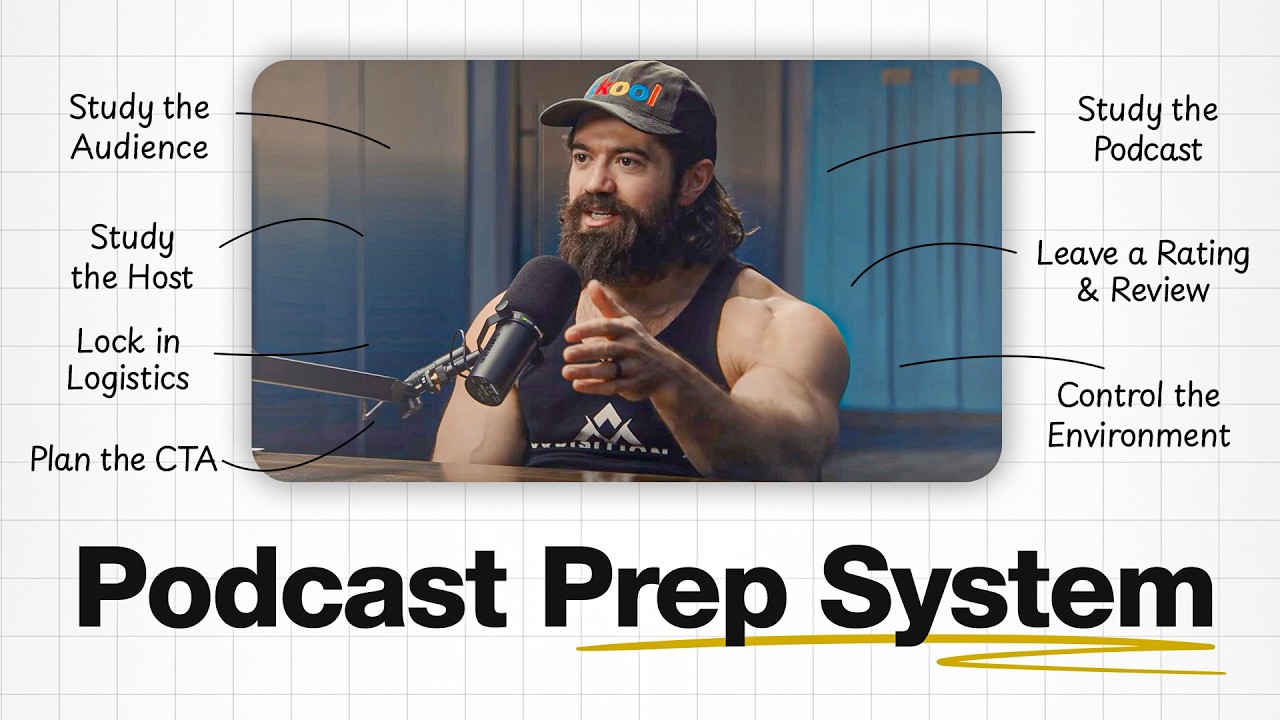
Here are the five pre-interview systems that actually move the needle.
Why Most Podcast Interview Preparation Fails to Generate Leads or Revenue
Most business owners think podcast interview preparation means reviewing their talking points and making sure their mic works. That's maybe 10% of what actually matters.
Here's the real issue. People go on podcasts and talk about whatever THEY want to talk about. They share their story the way THEY want to share it. They present their offer the way THEY think it should be presented.
But what you want to share is often not what that specific audience needs to hear.
I learned this lesson the hard way. A couple years ago, I gave a TEDx talk. One of my mentors, Les Brown, called me up 12 hours before the presentation. I had sent him a recording of my practice talk two weeks earlier, asking him to review it.
He said something that changed how I think about every appearance: "Deven, what you shared in that video, that is the message you want to share. But the message you want to share oftentimes is not the message that audience needs to hear."
That's the disconnect. Most people prepare their content without ever considering WHO they're speaking to. They don't study the audience. They don't understand the theme of the show. They don't know what problems those listeners are actually trying to solve.
And then they wonder why "podcasts don't work" for their business.
The five systems I'm about to break down fix this problem at the root. They ensure that before you ever hit record, you've done the work to maximize the likelihood that your appearance actually converts.
How to Study the Podcast Audience to Contextualize Your Message for Maximum Conversion
The first step in podcast interview preparation is understanding exactly who you're speaking to. This sounds obvious, but almost nobody actually does it.
Here's what I mean by "study the audience." You need to become intimately familiar with a few specific things about the people who listen to that show.
First, what is the theme of the podcast?
Take my podcast as an example. It's called the 7-Figure Mentor Podcast. If you're coming on my show, guess what? Everybody in that audience is looking to do one thing: get to the seven-figure mark. So when you share your message and articulate what you do, you need to contextualize and customize your message specifically to that audience.
You don't give the same presentation you'd give on a podcast about work-life balance. You don't share your story the same way you would on a podcast about mindset. You speak directly to what THAT audience cares about.
Second, where can you find this information?
Go to Apple Podcasts or Spotify and look at the podcast description. It's typically near the top, and you can click "read more" to see the full breakdown of exactly what the show is about. This takes two minutes and most people skip it entirely.
Third, who are these people and where are they in their journey?
Are they beginners? Are they established business owners looking to scale? Are they in a specific industry? The theme of the podcast attracts a certain type of individual, and understanding that person allows you to frame everything you say in terms THEY care about.
This is the difference between going to the gym and getting zero results versus making a radical transformation in a short amount of time. The vehicle is the same. The preparation is what determines the outcome.
Why Studying the Podcast Theme and Bookends Increases Your Conversion Rate
Beyond understanding the audience, you need to study the actual podcast itself. This means listening to at least one or two episodes before your appearance.
Now, I know what you're thinking. "Deven, I'm a busy business owner. I don't have time to listen to episodes."
Here's the hack: put it on 2x speed. You can get through a 60-minute episode in 30 minutes. That small investment of time can dramatically increase your conversion rate.
Here's what you're looking for when you listen:
First, get familiar with the host. How do they ask questions? What's the tempo of the interview? What kind of guests have they had in the past? This gives you a feel for what to expect and how to calibrate your energy.
Second, and this is critical, focus on the bookends. How does the podcast host BEGIN the interview? How do they END it?
Why does this matter? Because most podcast hosts start and end their shows the exact same way every single time.
About 75% of the time, the first question is going to be something related to your story. "How did you get here?" "Tell us about your background." "What led you to start your business?" If you know this is coming, you can craft an incredible answer in advance instead of winging it.
The ending matters even more. At the end of the podcast, you want to be able to bake your offer into a call-to-action. But if you have no idea how that host ends their show, you don't even know if they give you the opportunity to pitch. Some hosts say "Where can people follow you?" Others ask "Do you have something to give the audience?" Others just say goodbye.
Knowing this in advance allows you to prepare accordingly. You're not caught off guard. You're not fumbling for words. You've already rehearsed exactly what you're going to say when that moment comes.
How to Research the Podcast Host to Turn Them Into an Active Promoter
This is where most people completely drop the ball. They study the audience. They might even listen to an episode. But they know absolutely nothing about the host themselves.
Here's why this is such a massive missed opportunity.
The host is the facilitator between you and your ideal client. Think about it. You're trying to reach people in the audience. But sitting between you and those people is the podcast host. They control the conversation. They ask the questions. They can either help you shine or leave you struggling.
Most podcast hosts are used to guests who know jack about them. The guests don't know the host's background, what's going on in their life, what they care about, nothing. That's what hosts expect because that's what they get 99% of the time.
But if you're watching this, you don't want to be like everybody else. You want to stand out. You want the highest possible chance of converting listeners into clients.
The host can be one of two things: your greatest promoter or your greatest detractor. If you show up like everybody else, unprepared and self-focused, they're going to be neutral at best. But if you show up having done your research, having taken an interest in THEM as a person, you can turn that host into someone who actively wants to see you win.
Here's how to research the host practically:
Go to their Instagram, Facebook, LinkedIn, YouTube. Look for life events. Did they recently get married? Have a baby? Travel somewhere? Launch something new? Take note of these things.
Then, in the pre-podcast chat before you go live, you can contextualize the conversation. "Hey, I saw you recently had a baby. Congratulations!" or "I noticed you just launched that new program. That's awesome."
Context leads to people feeling special. It shows you're not just in it for what you can get. You actually paid attention. You care about them as a person.
The Reciprocity Principle That Gets Hosts to Actively Promote You After the Interview
There's a psychological principle at play here that makes this host research strategy so powerful: reciprocity.
When you do something for somebody, when you make someone else feel special, they are naturally and subconsciously going to do everything in their ability to make you feel special in return.
This isn't manipulation. This is how human relationships work. When someone takes a genuine interest in you, you want to help them. When someone makes you feel valued, you look for ways to return that feeling.
By studying the host, you trigger this reciprocity response. You show up having done your homework. You make them feel noticed and appreciated. And in return, they give you better questions, more airtime, and often active promotion after the episode.
Here's another thing to look for: has the host been a guest on other podcasts?
Find one of those episodes, put it on 2x speed, and listen for 10 minutes. Then during your conversation, you can say something like "Hey, I heard you on XYZ podcast where you talked about [specific topic]. That was an incredible episode."
Now they feel special. They feel like you actually care. And that reciprocity kicks in hard.
This one shift turns you from "just another guest" into someone the host genuinely wants to help succeed.
How Holly Burke Hone Got 50 Plus Leads From One Podcast Appearance Using Host Research
Let me give you a real example of what's possible when you actually implement this podcast interview preparation system.
One of our clients, Holly Burke Hone, is a former Chief of Staff at the FBI. Before going on a podcast, she actually listened to us and studied the host in advance.
She went to the host's social media, saw what was going on in their life, and noticed that the host had recently had a baby.
When Holly got on the podcast, before they even started recording, they had a few minutes of pre-podcast chat. During that conversation, Holly was able to contextualize everything based on what was going on in the host's life. She congratulated her on the baby, asked how things were going, showed genuine interest.
Here's what happened next.
After the podcast ended, the host did something they never do. They went straight to their Instagram account with thousands of followers and actively promoted Holly BEFORE the episode even aired. Most hosts wait until the episode is published to share anything. This host was so impressed that she promoted Holly immediately.
The result? Holly got 50+ leads just from that one podcast appearance. Not from the episode itself going live. From the host actively promoting her because Holly had differentiated herself and made that host feel special.
That's the power of proper podcast interview preparation. One conversation, studied and contextualized correctly, can generate more leads than ten appearances where you just show up and wing it.
Why Leaving Ratings and Reviews 48 Hours Before Builds Instant Rapport With Hosts
Here's a simple tactic that almost nobody does, and it makes a huge difference in how hosts perceive you before you even get on the call.
Leave a rating and review on the podcast 48 hours before your interview.
Why does this work? Because podcast hosts, whether they want to admit it or not, are driven by their ego. Part of the reason they created the podcast in the first place is they want to feel noticed. They want to feel like their message is getting out into the world and impacting people.
Ratings and reviews tap directly into that. They're a status symbol. "I got 500 reviews. Badass." It makes hosts feel some type of significance.
Now, here's the thing. I don't even think ratings and reviews actually do anything significant in terms of searchability or algorithms on Apple Podcasts and Spotify. But it doesn't matter. What matters is it makes the host feel special.
Here's how to do it properly:
On Spotify, you can only leave a star rating, but it requires you to listen to an entire episode first. Do that. Don't just fast-forward and leave stars. Actually listen, because it reinforces everything else we've talked about.
On Apple Podcasts, scroll down and leave both a rating AND a written review. Make it contextual. Don't just put some generic garbage.
I like to say something like: "This is one of the best podcasts I've recently come across, specifically for [type of person] who's looking to [achieve specific outcome]."
And here's the key: at the bottom of your review, put a dash and your name. "— Deven Rodriguez." Why? So the host can see it was YOU.
Now when you get on the podcast, you've already built rapport before the conversation even starts. And when we teach people how to introduce themselves on podcasts, part of our strategy involves encouraging the audience to leave ratings and reviews. You can say "I just left mine a couple days ago, so you'll see mine over there."
The host thinks: "Wow, you left a review AND you're encouraging my audience to do the same? I love you." Reciprocity kicks in again.
Do this 48 hours before because Apple Podcasts can take a couple days to populate new reviews.
How to Pre-Plan Podcast Interview Logistics to Eliminate Performance-Killing Stress
This might sound like basic common sense, but I'm telling you right now, I've seen these simple logistics issues ruin so many podcast appearances.
First, make sure the podcast is clearly marked on your calendar.
If you use Google Calendar, the moment you book the podcast, go directly to your calendar and confirm it's there. If it's not, add it yourself or message the host asking for a calendar invite. There's nothing worse than missing a podcast because it simply wasn't on your calendar.
Second, and this is the one I see screw people up constantly, make sure you have the link to the podcast recording.
You might be thinking "Deven, this is common sense." Well, as someone who has worked with hundreds of people and booked thousands of podcasts, why do you think I'm mentioning it? Because common sense ain't so common.
Sometimes hosts don't send you the Zoom or Riverside link until the day before, or even hours before. Be proactive. Set a reminder to follow up with the host if you don't have the link at least 24 hours in advance.
Here's what happens when you don't do this. Five minutes before the episode, you go to click on your Google Calendar invite, and there's no link. Now you're freaking out. You're scrambling to find their social media, sending DMs, emailing them, doing whatever you can.
Even if you eventually find the link, your cortisol has spiked. You're stressed. You're not thinking clearly. And that negative energy carries into your appearance. Your performance suffers through no fault of your actual content.
Do yourself a favor. Confirm you have the link when you book. If you don't, follow up until you get it. Super simple, but I can't tell you how many times I've seen this derail an otherwise great opportunity.
Why Controlling Your Recording Environment Directly Impacts Podcast Conversion
Your environment has a bigger influence on your podcast interview preparation and performance than most people realize. Little things that seem insignificant can completely derail your focus.
First, if you're using Zoom, make sure you have the background noise filter turned on and set to high.
There's a setting that says something like "background noise elimination." It has options for low, medium, and high. Put it on high. Why? Because if your dog starts barking, or someone knocks on your door super loud, or your family is talking in the other room, that audio gets picked up.
Podcasts are primarily an audio-based platform. Your appearance lives or dies by the audio experience. Filtering out background noise is essential.
If you're using Riverside instead of Zoom, there should be something called "echo cancellation." Click that on.
Second, make sure your background looks professional.
Don't record in your bedroom with messy sheets everywhere or random stuff scattered around. If you don't have a good environment to film in, use Zoom's blur background feature. It cleans things up without looking fake.
What you do NOT want to do is use those graphic virtual backgrounds where it's clearly a fake image behind you. Those look corny. And if you want to repurpose that content into clips later, those virtual backgrounds tank the video quality.
The easiest solution is just to have a decent-looking backdrop. It can literally be a plain wall. Just don't have crazy stuff visible that distracts from your message.
Third, if you have other people in the house, let them know you have a podcast.
"Hey, I have a podcast coming up. For the next hour, please keep it down so I can focus." Simple communication prevents so many issues.
Fourth, if you have pets, put them in another room.
I've seen people get licked by their dog in the middle of an episode. Sure, it's cute. The host might smile. But it distracts you. It breaks your train of thought. And that momentary distraction can cost you the most important point you were about to make.
Control your environment so your environment doesn't control you.
The Tech Setup Checklist That Makes Your Podcast Appearances Look Professional
Beyond your environment, you want to make sure your tech setup is dialed in. This doesn't mean spending thousands of dollars on equipment, but a few strategic investments make a big difference.
First, get a decent microphone.
A really good affordable option is the Samson Q2U, which runs about $99. It's a solid mic that dramatically improves your audio quality.
If you want something a step up, Shure makes a USB-C mic that plugs directly into your computer. It's around $249. The one I use requires additional audio interface equipment which adds cost, so I'd recommend the USB-C version for most people.
Why does this matter so much? Because podcasts are primarily audio-based. If your audio sounds bad, nothing else matters. You could have the most brilliant insights in the world, but if listeners have to strain to hear you or deal with bad sound quality, they tune out.
Second, consider getting a 4K webcam.
I'm not talking about a $2,000 DSLR camera. Just a decent webcam. Go look up the Logitech 4K camera. It's about $200.
Why? Because if you want to repurpose the content from your appearances into clips and other content, you want it to look good. Nobody wants to watch blurry video.
I will say, if you have a Mac, the internal camera is actually pretty good. You could probably get away with using that. Just make sure to wipe the camera lens with a microfiber cloth before you start. You'd be surprised how much dust and smudges affect video quality.
But if you have a PC like a Lenovo or similar, the built-in webcams are usually not great. In that case, investing in an external webcam is worth it.
How to Get Raw Footage From Hosts to Maximize Content Distribution After Interviews
This is one of the most important parts of podcast interview preparation that people forget entirely. And it happens at the END of the interview, not before it.
You need to get the raw footage from the podcast host.
Here's why this matters so much. Sometimes a podcast doesn't come out for 90 days. Sometimes 120 days or more. The episode sits in their production queue while you're waiting around unable to do anything with it.
But the real value from podcast appearances comes from how you repurpose and distribute that content. We call this creating a content distribution system. You take the footage from these podcasts and turn it into clips, social posts, email content, ads, sales assets, everything.
That content distribution is what allows you to amplify and multiply the impact these shows have on your business. But if you don't have the footage, you can't do any of that.
So here's what you do. At the END of the podcast, after you've built rapport throughout the conversation, ask the host: "Hey, would you mind sending me the raw footage from our conversation today? I want to send it to my content team so we can create content to help promote your episode."
Notice how you frame it in THEIR best interest. You're not saying "I want the footage for my stuff." You're saying you want to create content that promotes THEIR show.
Be specific about timing too. Say: "Would you be able to send that over today so I can get my team started on it?"
Then add: "I'm going to tell my email list and followers to leave you a five-star rating and review."
They're almost certainly going to say yes. You've built rapport throughout the interview. You're framing it as helping them. And you're offering to drive reviews to their show.
Do this at the END of the episode, not before. You want to have built that trust and connection first so the request feels natural, not transactional.
Why Proper Podcast Interview Preparation Is the Difference Between Zero Leads and 50 Plus
Here's the bottom line.
If you want to actually convert podcast appearances into clients, you need to stop treating preparation like an afterthought. Proper podcast interview preparation isn't optional. It's the thing that determines whether you walk away with leads or walk away with nothing.
Let's recap the five systems:
System 1: Study the audience and the podcast. Understand who listens to the show, what the theme is, and how the host starts and ends episodes. Contextualize your message to THAT specific audience.
System 2: Study the host. Go to their social media, see what's going on in their life, find podcasts they've been a guest on. Use this information to build genuine rapport before and during the interview.
System 3: Leave a rating and review 48 hours before. Tap into the host's ego and trigger reciprocity before you ever get on the call.
System 4: Pre-plan all logistics. Confirm it's on your calendar and you have the recording link at least 24 hours in advance. Eliminate stress before it sabotages your performance.
System 5: Control your environment and tech. Background noise filter on high, professional backdrop, pets and people handled, decent mic and camera ready to go.
And don't forget to get the raw footage at the end. Frame it as helping them promote the episode, be specific about timing, and offer to drive reviews.
This is the difference between the person who goes to the gym and gets zero results and the person who transforms their body in record time. The vehicle is the same. The preparation is what separates winners from everyone else.
Implement these systems before your next podcast appearance and watch what happens. When preparation meets opportunity, that's when conversions happen.